


Press Tool A Complete Guide to Its Uses, Types, and Importance in Modern Manufacturing
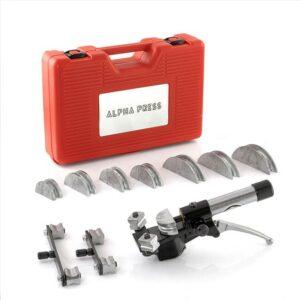
Introduction
In today’s fast-paced industrial world, precision, efficiency, and consistency are essential. One of the most critical instruments that support these requirements is the Press Tool. Widely used across manufacturing, engineering, and fabrication industries, a press tool plays a vital role in shaping, cutting, forming, and assembling materials—especially metal—into finished or semi-finished products.
This article explores what a press tool is, how it works, its main types, applications, benefits, and why it remains indispensable in modern production environments.
What Is a Press Tool
A Press Tool is a specialized device used in conjunction with a mechanical or hydraulic press machine to cut, shape, bend, punch, or form materials, most commonly sheet metal. The press tool itself consists of multiple components such as punches, dies, guide plates, and strippers, which work together to perform specific operations with high accuracy.
Press tools are designed for mass production, allowing manufacturers to produce identical components repeatedly with minimal variation.
How a Press Tool Works
The operation of a press tool involves applying controlled force to a workpiece placed between the punch and die. When the press machine activates:
The punch moves downward.
The material is pressed against the die.
The desired operation—cutting, bending, or forming—takes place.
The finished part is released, and the next cycle begins.
This process enables fast production while maintaining tight tolerances, making press tools ideal for high-volume manufacturing.
Types of Press Tools
Different manufacturing needs require different press tools. Below are the most common types used in industry:
Blanking Press Tool
Sheet metal is sliced into flat shapes using a blanking press tool. The removed piece (blank) is the desired product, while the remaining material is scrap.
Piercing Press Tool
This press tool creates holes or cutouts in metal sheets. The removed section is discarded, and the sheet continues to further processing stages.
Bending Press Tool
Used to bend metal sheets into angles or curves without cutting them. These tools are common in brackets, enclosures, and frames.
Forming Press Tool
A forming press tool reshapes metal without removing material, allowing complex shapes such as embossments or contours.
Progressive Press Tool
This advanced press tool performs multiple operations in a single press stroke as the metal strip moves through different stations. It is ideal for large-scale production.
Compound Press Tool
A compound press tool performs multiple cutting operations in one stroke, improving efficiency and accuracy.
Key Components of a Press Tool
A typical press tool consists of several essential parts, including:
Punch – The moving component that applies force.
Die – The stationary part that shapes or cuts the material.
Guide Pins and Bushes – Ensure precise alignment.
The workpiece is removed from the punch using a stripper plate.
Shank: Attaches the press tool to the press apparatus.
Each component must be precisely manufactured to ensure tool durability and performance.
Applications of Press Tools
Press tools are used in a wide range of industries due to their versatility and efficiency:
Automotive Industry – Body panels, brackets, engine parts
Electrical Industry – Switch components, terminals, connectors
Appliance Manufacturing – Casings, frames, and panels
Construction – Metal fittings and structural components
Aerospace – Precision metal parts with tight tolerances
From small electronic parts to large automotive components, the press tool is central to modern manufacturing.
Benefits of Using a Press Tool
The popularity of press tools is driven by several important advantages:
High Productivity
Press tools allow rapid production cycles, making them ideal for mass manufacturing.
Consistent Quality
Once set up correctly, a press tool produces identical parts with minimal deviation.
Cost Efficiency
Although initial tool design and manufacturing costs can be high, the long-term cost per unit is very low.
Precision and Accuracy
Press tools achieve tight tolerances that are difficult to maintain with manual methods.
Reduced Labor Dependency
Automation reduces human error and labor costs while improving safety.
Press Tool Design and Maintenance
Effective press tool performance depends heavily on proper design and regular maintenance. A well-designed press tool considers material type, thickness, production volume, and press machine capacity.
Routine maintenance includes:
Cleaning after use
Lubrication of moving parts
Inspection for wear and damage
Timely sharpening or replacement of punches and dies
Neglecting maintenance can lead to poor product quality, tool failure, and increased downtime.
The Future of Press Tools
With advancements in CAD/CAM software, CNC machining, and automation, press tool technology continues to evolve. Modern press tools are now designed with simulation software to reduce errors and optimize performance before production begins.
Integration with smart manufacturing and Industry 4.0 systems allows real-time monitoring, predictive maintenance, and improved efficiency—ensuring that the press tool remains a cornerstone of industrial production.
Conclusion
The Press Tool is an essential component of modern manufacturing, offering unmatched speed, precision, and consistency. Whether used in automotive, electrical, or construction industries, press tools enable large-scale production while maintaining high quality standards.
By understanding the types, applications, and benefits of press tools, manufacturers can make informed decisions that improve productivity and reduce costs. As technology advances, press tools will continue to adapt, reinforcing their importance in the future of industrial manufacturing.
See more our website:visit here

 English
 Arabic
 French
 Spanish
 Portuguese
 Turkish
 Dutch
Dutch
 Italiano
 Russian
 Romaian
 Portuguese (Brazil)
 Greek
Greek