


Automating Application Management with Container Orchestration
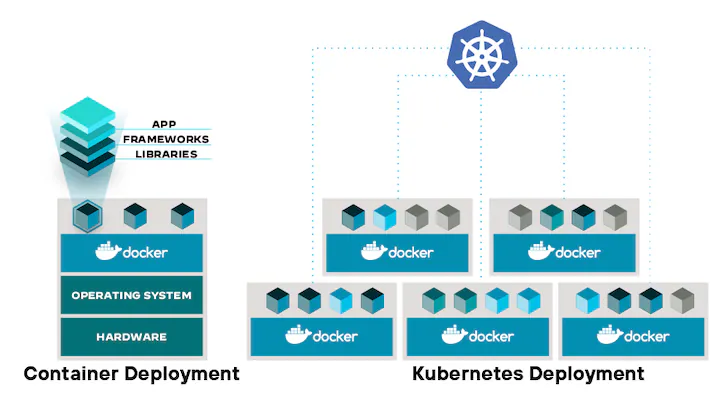
Container orchestration has emerged as a cornerstone of modern software development and IT operations, transforming how applications are deployed, managed, and scaled. As organizations increasingly adopt cloud-native architectures, container orchestration provides the automation and control necessary to handle complex application environments efficiently. By coordinating the deployment, scaling, and networking of containerized applications, orchestration platforms allow businesses to achieve faster release cycles, greater reliability, and improved resource utilization. In an era where agility and scalability are crucial, container orchestration has become an essential enabler for enterprises seeking digital transformation.
At the heart of container orchestration are key concepts and core components that ensure smooth application management. Containers themselves encapsulate applications and their dependencies, providing consistency across environments. Orchestration platforms manage clusters of containers, automating tasks such as load balancing, resource allocation, and health monitoring. Core components typically include scheduling engines that determine where containers run, service discovery to enable communication between containers, and automated scaling to adjust resources dynamically based on demand. These platforms also provide mechanisms for configuration management, fault tolerance, and logging, ensuring operational stability and reducing manual intervention. Kubernetes, Docker Swarm, and Apache Mesos are among the most widely adopted orchestration tools, each offering unique capabilities to meet different organizational needs.
Container orchestration has found applications across diverse industries, highlighting its versatility and transformative impact. In the financial sector, orchestration supports high-frequency trading platforms and banking applications requiring reliability and rapid scaling. In healthcare, it enables the deployment of patient management systems and telemedicine platforms while ensuring regulatory compliance. Retail and e-commerce companies use orchestration to manage complex microservices architectures that power online stores, inventory management, and personalized recommendations. Similarly, the media and entertainment industry leverages container orchestration for content delivery, streaming platforms, and digital asset management, ensuring consistent performance and availability. By facilitating seamless deployment and management of applications, container orchestration empowers organizations to innovate and respond swiftly to market demands.
The growth of container orchestration is fueled by several key drivers and opportunities. The widespread adoption of microservices architecture encourages modular, containerized applications that orchestration platforms can efficiently manage. Cloud computing has accelerated the shift toward scalable, distributed systems, where orchestration simplifies resource management and deployment across hybrid or multi-cloud environments. DevOps practices, emphasizing automation, continuous integration, and continuous delivery, further enhance the appeal of container orchestration by reducing operational complexity and enabling faster software delivery. Additionally, the rise of edge computing and IoT deployments presents opportunities for orchestration to manage distributed workloads efficiently, extending its relevance beyond traditional data centers.
Despite its advantages, container orchestration also faces challenges, risks, and limitations. Complexity remains a significant concern, as managing large-scale clusters requires expertise and careful planning. Security risks, including misconfigurations and vulnerabilities within container images, pose potential threats to enterprise applications. Ensuring compliance with data privacy regulations while orchestrating containers across multiple environments can be demanding. Performance bottlenecks may arise if resources are not allocated optimally, and monitoring distributed systems at scale presents operational challenges. Organizations must carefully evaluate orchestration strategies and invest in skilled personnel and robust tools to mitigate these risks effectively.
Emerging trends and innovations are shaping the future of container orchestration, pushing the boundaries of automation and efficiency. AI-driven orchestration is gaining traction, enabling predictive scaling, anomaly detection, and optimized resource allocation based on real-time analytics. Serverless container models allow developers to run containers without managing underlying infrastructure, further simplifying operations. Integration with advanced observability tools enhances monitoring, troubleshooting, and performance tuning of containerized applications. Open-source contributions and cloud-native ecosystem growth continue to expand orchestration capabilities, making it easier for organizations of all sizes to adopt and customize solutions according to specific requirements.
Regional and industry-wise insights reveal varied adoption patterns and priorities in container orchestration. Enterprises in North America and Europe tend to lead in cloud-native adoption, with a strong focus on scalability, DevOps integration, and multi-cloud strategies. In Asia-Pacific, rapid digitalization, e-commerce growth, and increasing cloud adoption are driving container orchestration uptake, particularly among startups and technology-driven enterprises. Industry-specific factors, such as stringent regulatory requirements in healthcare or high-availability demands in finance, influence orchestration deployment strategies and tooling choices. By understanding these regional and sectoral dynamics, organizations can tailor their container orchestration approaches for maximum efficiency and compliance.
The future of container orchestration appears promising, with continued innovation and broader adoption expected across industries. As organizations seek faster development cycles, enhanced reliability, and cost-efficient operations, orchestration platforms will evolve to offer even greater automation, intelligence, and interoperability. The convergence of containers with serverless computing, AI-driven insights, and edge infrastructure will redefine application deployment paradigms, enabling businesses to respond to changing demands swiftly. In conclusion, container orchestration is no longer an optional technology but a strategic enabler that drives efficiency, agility, and resilience in modern IT landscapes, supporting enterprises in their journey toward digital transformation.
Top Trending Reports -
Germany Cloud Backup Market Trends

 English
 Arabic
 French
 Spanish
 Portuguese
 Turkish
 Dutch
Dutch
 Italiano
 Russian
 Romaian
 Portuguese (Brazil)
 Greek
Greek