


Post-Cardiac Event Nursing & Heart Failure Care in Greater Noida & Dwarka
360° Comprehensive Post-Cardiac Event Home Nursing, Pacemaker Care & Heart Failure Rehabilitation Guide for Greater Noida, Dwarka Delhi, and Delhi NCR
An exhaustive clinical, operational, and practical nursing manual covering post-myocardial infarction recovery, congestive heart failure monitoring, pacemaker incision care, fluid balance management, cardiac diet compliance, and 24/7 patient attendant services across Greater Noida, Dwarka Delhi, and the National Capital Region.
Table of Comprehensive Contents
- 1. Understanding Post-Cardiac Recovery: The Vulnerable Post-Discharge Phase
- 2. Clinical & Psychological Advantages of In-Home Cardiac Care
- 3. Core Cardiac Care Modules: From Pacemaker Sites to Heart Failure Protocol
- 4. Essential Cardiac Nursing Protocols: Vitals, Fluid Balance & Emergency Safety
- 5. Regional Operational Focus: Greater Noida vs. Dwarka Delhi
- 6. Cardiac Caregiver Cost Matrix & Financial Budgeting in Delhi NCR
- 7. Frequently Asked Questions (FAQs) & Caregiver Vetting Framework
1. Understanding Post-Cardiac Recovery: The Vulnerable Post-Discharge Phase
Surviving an acute cardiac event—such as a myocardial infarction (heart attack), congestive heart failure (CHF) exacerbation, permanent pacemaker implantation, or coronary stenting—is a turning point in a patient's life. While acute catheter lab procedures, coronary angioplasty, or hospital stays stabilize primary cardiac rhythms and blockage issues, the long-term journey of myocardial recovery takes place at home.
The initial 30 to 90 days following discharge represent a high-risk window for unexpected cardiac complications. Fluctuations in blood pressure, silent fluid accumulation in lungs, rhythm disturbances (arrhythmias), or medication non-compliance frequently lead to emergency hospital readmissions. Managing these health risks without professional clinical support can cause severe anxiety for both the patient and their family.
Establishing a structured home healthcare environment bridges hospital discharge with long-term lifestyle stability. Certified cardiac home nurses and trained patient care attendants manage daily vitals, track fluid intake and output, inspect surgical pacemaker incision sites, administer complex cardiovascular drug schedules, and assist with progressive cardiac rehabilitation walks directly at the patient's bedside.
2. Clinical & Psychological Advantages of In-Home Cardiac Care
Managing a recovering cardiac or heart failure patient at home through professional caregiving delivers distinct physical, biological, and emotional benefits over extended hospital stays:
Reduced Psychological Stress & Cortisol Spikes
Hospital wards can cause high stress, sleep disruption, and anxiety—factors that trigger sympathetic nervous system activation, elevating blood pressure and heart rate. Recovering at home in a familiar, quiet domestic setting keeps stress hormones low, protecting the healing myocardium.
Protection Against Nosocomial Infections
Post-cardiac patients, especially elderly individuals or those with fresh pacemaker incisions, are vulnerable to hospital-acquired respiratory and surgical site infections. A clean home environment significantly minimizes cross-contamination risks.
100% Undivided Bedside Nursing Attention
Unlike floor nurses in busy hospitals who divide their time among multiple beds, a dedicated private cardiac nurse focuses entirely on one patient. This ensures immediate recognition of subtle signs of distress, such as sudden weight gain, pedal edema, or breathing difficulty.
Significant Financial Optimization for Families
Extending a hospital stay solely for medication titration, oxygen monitoring, or daily vital tracking incurs high daily room charges. Setting up professional home nursing care reduces daily expenses by up to 60% while maintaining clinical vigilance.
3. Core Cardiac Care Modules: From Pacemaker Sites to Heart Failure Protocol
Post-cardiac care plans are customized according to the patient's specific diagnosis and cardiologist discharge instructions:
3.1 Post-Myocardial Infarction & Angioplasty Recovery
Following a heart attack or stent placement, care focuses on cardiac strain prevention and lifestyle adjustment:
- Femoral / Radial Puncture Site Care: Monitoring arterial access sites for hematoma formation, bleeding, or localized swelling post-angioplasty.
- Strict Medication Compliance: Administering antiplatelets, beta-blockers, ACE inhibitors, and statins on precise schedules to prevent stent thrombosis.
- Progressive Walking Exercises: Guiding short, structured walks to rebuild endurance without exceeding safe heart rate limits.
3.2 Congestive Heart Failure (CHF) & Fluid Balance Management
Patients with weakened heart pumps require vigilant fluid control to prevent fluid buildup in the lungs (pulmonary edema):
- Daily Weight Logging: Weighing the patient every morning before breakfast to detect sudden fluid retention early (e.g., gain of 1–2 kg over 48 hours).
- Pedal Edema & Lung Sound Checks: Inspecting ankles for swelling and listening for chest crackles or shortness of breath.
- Fluid & Sodium Restriction Enforcement: Ensuring strict adherence to daily fluid limits (e.g., 1.5 liters/day) and low-salt meal preparation.
3.3 Pacemaker & Implantable Cardioverter Defibrillator (ICD) Care
For patients with fresh cardiac device implants, nurses manage stoma safety:
- Aseptic Pectoral Wound Dressing: Inspecting incision lines for redness, heat, or discharge to prevent surgical site infections.
- Arm Movement Precautions: Ensuring the patient avoids raising the affected arm above shoulder level for 4 to 6 weeks to prevent lead displacement.
4. Essential Cardiac Nursing Protocols: Vitals, Fluid Balance & Emergency Safety
Caring for a heart patient requires disciplined daily tracking protocols:
1. Multi-Parameter Vital Charting
Nurses record Blood Pressure (NIBP), Pulse Rate & Rhythm, Oxygen Saturation (SpO2), and Respiratory Rate every 4 hours, logging all data for doctor reviews.
2. Oxygen Therapy & Nebulization Support
Managing medical oxygen concentrators or cylinders for patients experiencing shortness of breath, ensuring proper nasal cannula hygiene and prescribed oxygen flow rates.
3. Cardiac Emergency Response Preparedness
Nurses are trained to recognize red-flag symptoms—such as chest pressure, radiating arm/jaw pain, cold sweating, or sudden drops in SpO2—and initiate emergency hospital transfer protocols instantly.
5. Regional Operational Focus: Greater Noida vs. Dwarka Delhi
Delivering prompt, reliable cardiac home nursing across NCR’s vast residential sectors requires strong localized caregiver networks and fast deployment capabilities:
Reliable Cardiac Support in Greater Noida
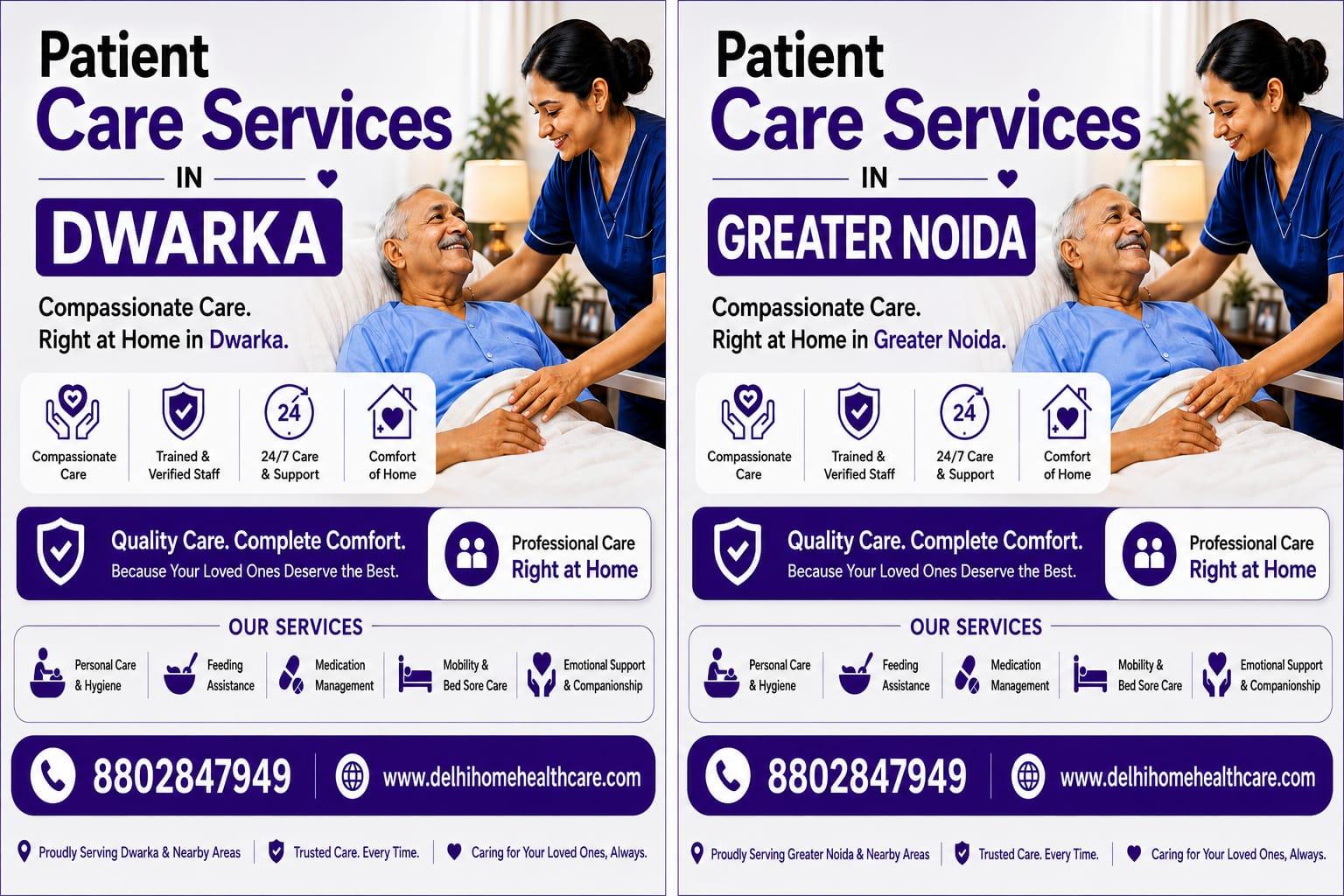
Greater Noida features wide residential sectors, independent villas, and large gated townships in Sector Alpha, Beta, Gamma, Delta, Omega, Zeta, Techzone, Pari Chowk, and Greater Noida West (Noida Extension). Multi-generational families in these spacious homes frequently require full-time live-in caretakers. Through specialized patient care services in greater noida provided by Delhi home healthcare services, families receive background-verified attendants and registered nurses who manage daily hygiene, vital tracking, and post-discharge recovery in close coordination with regional cardiology departments.
Dedicated Solutions in Dwarka, Delhi
Dwarka is one of Delhi's largest planned sub-cities, comprising Sectors 1 to 23, DDA societies, and luxury apartment complexes. Working professionals across Dwarka need dependable caregivers to assist recovering heart patients without disrupting daily work routines. Through our specialized patient care services in dwarka delhi, we deploy flexible 12-hour day/night staff and 24-hour live-in caretakers to ensure continuous family peace of mind and professional support.
6. Cardiac Caregiver Cost Matrix & Financial Budgeting in Delhi NCR
Transparent pricing helps families plan long-term cardiac recovery with complete financial clarity. Below is an estimated rate overview across Greater Noida, Dwarka, and Delhi NCR:
| Service Category | Caregiver Scope & Skills | Shift Duration | Approximate Price Range (INR) |
|---|---|---|---|
| Non-Medical Cardiac Attendant | Bathing, Diet Assistance, Vital Logging, Arm Precaution Aid | 12-Hour Shift | ₹800 – ₹1,200 per day |
| 24/7 Live-In Cardiac Attendant | Round-the-clock ADL Care, Night Assistance, Mobility Support | 24-Hour Live-In | ₹22,000 – ₹32,000 per month |
| Semi-Trained ANM Nurse | Oral Medications, Pacemaker Dressing, Vital Charting, Oxygen | 12-Hour / 24-Hour | ₹1,400 – ₹2,200 per day |
| Registered GNM / B.Sc Cardiac Nurse | Complex IV Meds, Cardiac Monitor Care, Emergency Aid, Catheter | 12-Hour / 24-Hour | ₹1,800 – ₹3,500 per day |
7. Frequently Asked Questions (FAQs) & Caregiver Vetting Framework
Essential Vetting Checklist Before Hiring an Agency
- Mandatory Verification: Confirm that staff members undergo complete Aadhaar verification, address checks, and local police background clearance.
- Cardiac Nursing Competency: Ensure nurses have documented experience in cardiac wards, vital logging, and fluid balance protocols.
- Replacement Guarantee: Verify that the agency guarantees a qualified replacement caregiver within 2 to 4 hours if primary staff takes leave.
- Emergency Preparedness: Confirm that caregivers are trained in CPR, vital sign alerts, and rapid emergency escalation.
Frequently Asked Questions (FAQs)
Q1. Why is daily weight checking important for heart failure patients at home?
A: Sudden weight gain in heart failure patients usually indicates fluid retention in lungs or legs rather than fat gain. Detecting weight spikes early allows cardiologists to adjust diuretic medication dosages before severe breathing difficulty occurs.
Q2. How quickly can a cardiac nurse or caregiver be deployed in Greater Noida or Dwarka?
A: Verified patient care attendants or registered home nurses can typically be deployed to family residences within 4 to 8 hours of receiving an inquiry.
Q3. What precautions should be taken after a pacemaker implantation at home?
A: Keep the chest incision dry and clean, inspect for infection signs, avoid raising the arm on the pacemaker side above shoulder level for 4–6 weeks, and ensure the patient avoids strong magnetic fields.
Conclusion: Restoring Heart Health, Dignity, and Peace of Mind at Home
Recovering from a major cardiac event requires disciplined medication routines, strict fluid monitoring, and empathetic daily support. By choosing professional home healthcare, you ensure that your loved one receives hospital-standard attention right in the warmth of home.
Whether you require patient care services in greater noida or trusted patient care services in dwarka delhi, professional home care delivers exact, dependable support. Connect with verified cardiac care experts today to arrange a personalized recovery plan.
Contact Delhi Home Healthcare Services
📞 Phone: 8802847949 / 7011181480
🌐 Website: https://delhihomehealthcare.com/
📍 Office Address: Block A, G001, Royal Avenue Apartment, Sarfabad, Sector 73, Noida, Uttar Pradesh 201307
📍 Our Services: Post-Cardiac Event Care, Pacemaker Care, Heart Failure Rehabilitation, Home Patient Care, Home Nursing, Elder Care, Patient Attendant Services, and 24×7 Home Healthcare Services across Delhi NCR, Greater Noida, and Dwarka.

 English
 Arabic
 French
 Spanish
 Portuguese
 Deutsch
 Turkish
 Italiano
 Russian
 Romaian
 Portuguese (Brazil)
 Greek
Greek