


khapli atta multigenerational indian family flour guide
Why Khapli Atta Works Across Every Generation in an Indian Household
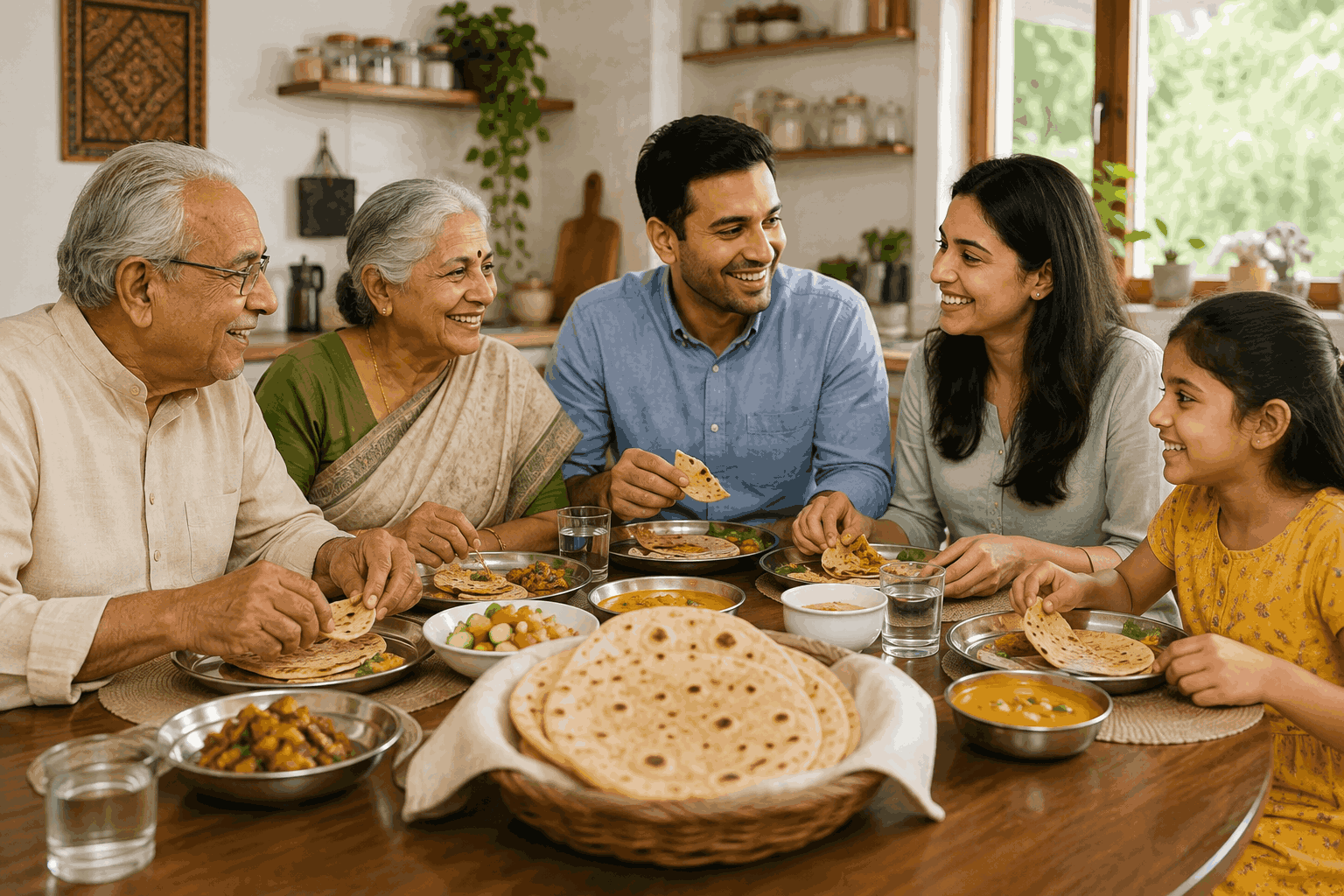
The joint family kitchen is one of the most nutritionally complex cooking environments in the world. A single meal needs to work for a grandfather managing type 2 diabetes, a grandmother with bone density concerns, two working parents with different energy requirements, and children at school who need sustained concentration through the day. And it needs to taste good enough that everyone at the table actually eats it.
Most daily flour choices in Indian kitchens are made by default — the same commercial wheat atta that's always been in the pantry, bought out of habit rather than deliberate selection. When a family actually evaluates what they want from their daily flour against the health profile of everyone sitting at the table, the case for switching to an ancient grain alternative becomes surprisingly compelling. Khapli atta — flour made from emmer wheat, one of the oldest cultivated wheat varieties in the world — is increasingly the answer that emerges from that evaluation.
What Makes Khapli Atta Different From Regular Wheat Flour
Modern commercial wheat is a product of decades of selective breeding optimised for high yield and uniform gluten content. What this breeding achieved in agricultural productivity came with trade-offs in nutritional density and digestive compatibility that are only now being understood clearly.
Khapli atta, made from emmer wheat, predates this modern wheat by thousands of years. It has a tougher outer husk, a denser kernel, and a gluten structure that is both lower in quantity and different in composition from modern wheat gluten. This ancient structure produces a flour that digests more slowly, produces a lower glycaemic response, and sits more comfortably in the digestive systems of people who find modern wheat heavy or bloating — without being gluten-free, making it suitable for the majority of households that don't need to eliminate gluten entirely.
For the Eldest Generation — Managing Blood Sugar and Digestion
The oldest members of a joint family household are often managing the most specific dietary requirements. Blood sugar management is one of the most common — India has one of the world's largest populations of adults with type 2 diabetes or pre-diabetic conditions, and the daily flour used for rotis is one of the most frequently consumed carbohydrate inputs in the diet.
Khapli atta's lower glycaemic index produces a more gradual blood sugar response than refined commercial wheat flour. The same roti meal, made with khapli atta instead of standard wheat atta, generates a slower glucose release that is less disruptive to blood sugar management. For elderly family members who eat roti multiple times daily, this difference accumulates into meaningful blood sugar stability improvement over weeks and months.
Digestive comfort is the second consideration for older family members. Many elderly Indians find commercial wheat increasingly difficult to digest comfortably — the bloating, sluggishness, and digestive heaviness that modern wheat produces in sensitive digestive systems is more pronounced in older adults whose digestive efficiency naturally changes with age. Khapli atta's lower modern gluten content and slower digestibility profile tends to produce noticeably better digestive comfort for this demographic.
For Working Adults — Energy Stability Through Demanding Days
Working adults in the household face a different nutritional challenge — sustained energy across demanding professional days, without the blood sugar spikes and mid-afternoon crashes that refined carbohydrate meals often cause.
The complex carbohydrate structure of khapli atta, combined with its higher fibre content relative to refined wheat, produces energy from rotis that is released more gradually than from commercial wheat flour. Lunch rotis made from khapli atta tend to sustain energy through the afternoon in ways that refined wheat rotis don't — a practical difference that working professionals notice within the first two weeks of consistent use.
For working women specifically, khapli atta's iron and mineral content — better preserved in the ancient grain's less aggressively processed flour — contributes to the nutritional intake that supports energy levels through the combination of professional demands and the physically active household role that many Indian women continue to maintain.
For School-Going Children — Sustained Focus Through the Learning Day
Children's nutritional needs during school years centre on two things: adequate nutrition for physical development, and stable blood sugar that supports the cognitive performance that classroom learning requires.
Refined wheat flour's rapid glycaemic response creates the blood sugar spike-and-dip pattern that undermines morning classroom concentration in children who eat wheat-heavy breakfasts. Khapli atta's flatter glycaemic response produces more stable blood sugar through the school morning — the hours when concentration requirements are typically highest.
The transition for children is usually smooth. Khapli atta rotis taste close enough to regular wheat rotis that most children accept the change without the resistance that accompanies the introduction of more dramatically different health foods.
Why Khapli Atta Is Rare Among Healthy Flour Options in Its Versatility
Most healthy flour alternatives require trade-offs that make them suitable for one family member but not others. Gluten-free flours don't work for family members who don't need to avoid gluten. Bajra and jowar produce distinctly different-tasting rotis that some family members accept and others don't. High-protein specialty blends are nutritionally appropriate for active adults but not necessarily for elderly members with different protein requirements.
Khapli atta avoids these trade-offs because it behaves like wheat flour — because it is wheat flour, just from a different, older variety. It produces rotis that taste familiar to every family member. The cooking process requires minimal adjustment from regular wheat roti technique. And the nutritional benefits it delivers — lower glycaemic response, better digestive compatibility, higher mineral retention — are relevant across every age group in the household, not just for specific members.
Finding Consistently Processed Khapli Atta
The nutritional advantages of khapli atta are only preserved when the flour is processed in a way that maintains the grain's natural bran and germ content. Over-milling degrades the fibre and mineral density that make the flour worth using. Inconsistent sourcing produces variable results that make it difficult to build the grain into a reliable daily habit.
For households committing to khapli atta as their regular daily flour, sourcing from brands that prioritise traditional processing is the difference between getting the full benefit and getting a product that looks like khapli atta on the label but delivers results closer to refined wheat. 10on10 Foods has built its product range around exactly this processing discipline — offering traditionally processed khapli atta that retains the grain's nutritional character in a form that's consistently available for everyday household use.
The Whole-Family Flour That Earns Its Place
The joint family kitchen's nutritional challenge — serving everyone well simultaneously — doesn't have many elegant solutions. Most require either multiple versions of the same meal or accepting that some family members' needs are better served than others.
Khapli atta is one of the genuinely rare solutions that works across the whole table — the grandfather's blood sugar, the grandmother's digestion, the working parent's afternoon energy, and the child's morning concentration. All served through the same roti, the same recipe, the same daily meal that the family was already making.

 English
 Arabic
 French
 Spanish
 Portuguese
 Deutsch
 Dutch
Dutch
 Italiano
 Russian
 Romaian
 Portuguese (Brazil)
 Greek
Greek