


What is Counterparty Risk Management? Strategies, Benefits,
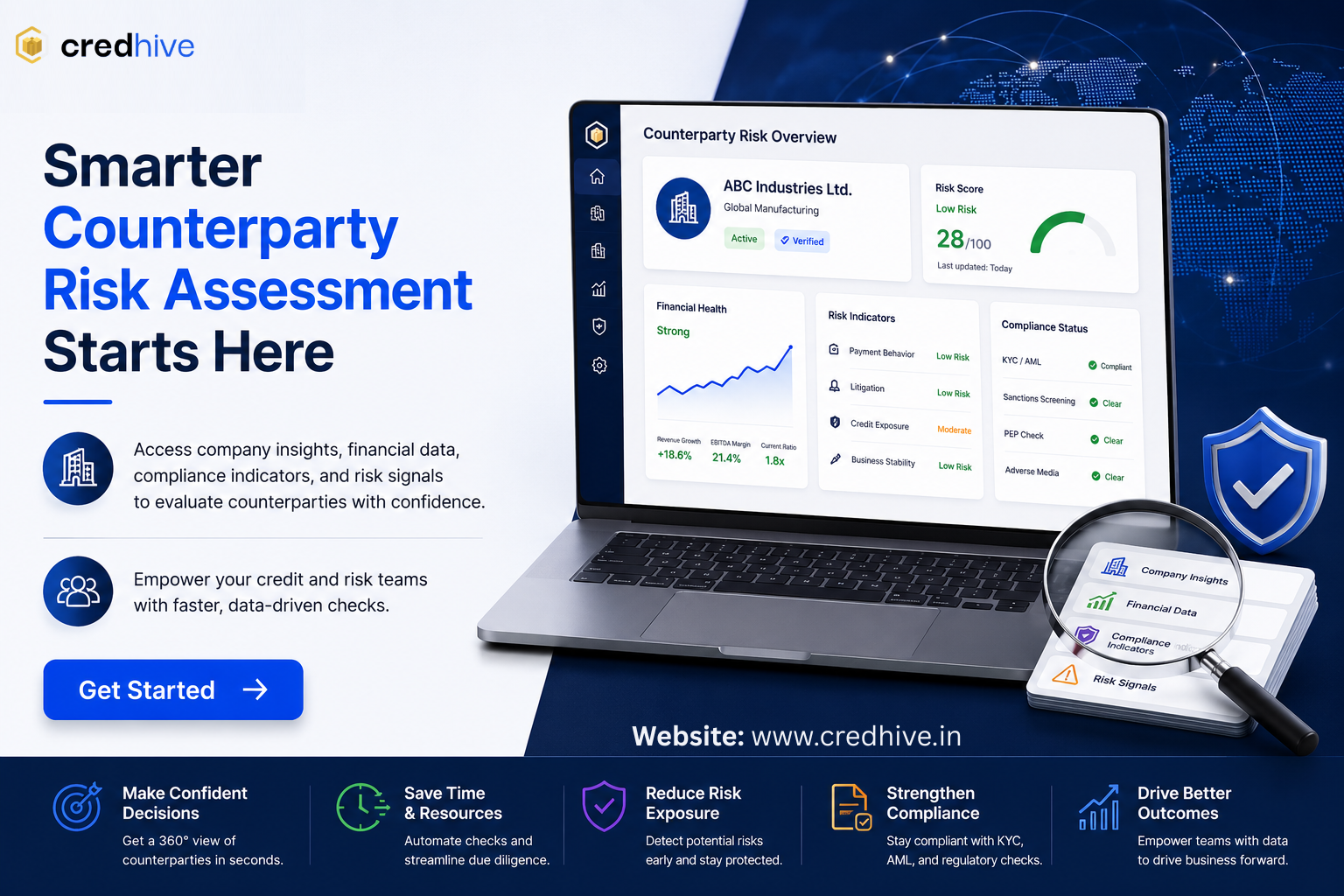
Businesses regularly engage with customers, suppliers, lenders, distributors, investors, and financial institutions. Every commercial transaction carries an element of risk, especially when one party may fail to meet its contractual or financial obligations. Whether it is a loan default, delayed payment, supplier insolvency, or regulatory issue, these risks can significantly impact an organization's financial stability. This is why counterparty risk management has become an essential component of modern enterprise risk management.
Counterparty risk management is the process of identifying, assessing, monitoring, and mitigating the risks associated with organizations or individuals involved in financial or commercial transactions. By evaluating a counterparty's financial health, creditworthiness, legal standing, compliance status, and operational stability, businesses can make informed decisions and minimize potential losses.
Today, banks, NBFCs, insurance companies, fintech firms, manufacturers, procurement teams, and large enterprises use AI-powered risk intelligence platforms to automate counterparty risk management and strengthen decision-making.
What is Counterparty Risk Management?
Counterparty risk management refers to the systematic process of evaluating the likelihood that a business partner, borrower, supplier, customer, or financial institution may fail to fulfill contractual, financial, or operational obligations.
It involves continuous analysis of various risk factors, including:
- Financial stability
- Creditworthiness
- Payment history
- Legal and litigation records
- Regulatory compliance
- Business operations
- Industry performance
- Management quality
The objective is to identify potential risks early and implement appropriate risk mitigation strategies before financial losses occur.
Why is Counterparty Risk Management Important?
A robust counterparty risk management framework helps organizations reduce uncertainty and improve business resilience.
Reduces Credit Risk
Evaluate borrowers and customers before extending credit or financing.
Protects Financial Stability
Identify financially distressed counterparties before defaults occur.
Improves Regulatory Compliance
Meet internal governance standards and regulatory requirements.
Supports Better Business Decisions
Reliable business intelligence leads to more informed lending, procurement, and investment decisions.
Strengthens Business Relationships
Working with financially stable counterparties builds trust and long-term partnerships.
Key Components of Counterparty Risk Management
A comprehensive counterparty risk management strategy includes multiple evaluation areas.
Financial Risk Assessment
Analyze:
- Revenue trends
- Profitability
- Liquidity
- Debt obligations
- Cash flow
- Financial ratios
Strong financial performance generally indicates lower default risk.
Credit Risk Analysis
Evaluate repayment history, credit exposure, outstanding obligations, and payment behavior.
Compliance Assessment
Review regulatory filings, tax compliance, statutory registrations, and corporate governance practices.
Legal Due Diligence
Identify litigation, regulatory penalties, insolvency proceedings, and legal disputes.
Operational Assessment
Assess operational capabilities, supply chain stability, business continuity, and internal controls.
Industry Risk Evaluation
Understand sector-specific challenges, market conditions, and competitive pressures.
How Counterparty Risk Management Works
Organizations typically follow a structured process.
Step 1: Collect Business Information
Gather financial statements, registration details, ownership information, and operational data.
Step 2: Verify Information
Validate data using trusted regulatory and government sources.
Step 3: Assess Risk
Analyze financial, operational, legal, compliance, and credit-related risks.
Step 4: Assign Risk Ratings
Categorize counterparties based on predefined risk scoring models.
Step 5: Continuous Monitoring
Monitor counterparties in real time to detect financial deterioration or compliance issues.
Benefits of Counterparty Risk Management
Better Lending Decisions
Banks and NBFCs reduce loan defaults through improved borrower evaluation.
Improved Supplier Selection
Procurement teams identify reliable suppliers with lower operational risk.
Reduced Financial Losses
Early identification of distressed counterparties minimizes exposure.
Enhanced Regulatory Compliance
Ensure counterparties meet applicable legal and compliance requirements.
Stronger Business Resilience
Continuous monitoring helps businesses respond quickly to emerging risks.
Technology Transforming Counterparty Risk Management
Modern counterparty risk management solutions rely on advanced digital technologies.
Artificial Intelligence (AI)
AI analyzes large datasets to identify hidden risks and unusual business patterns.
Machine Learning
Machine learning continuously improves risk models using historical and real-time business data.
Predictive Analytics
Forecast future financial stress, payment defaults, and operational risks.
Business Intelligence
Interactive dashboards provide consolidated insights into financial health, compliance, litigation, and business performance.
Automation
Automates risk scoring, document verification, alerts, reporting, and continuous monitoring.
Why Businesses Choose Credhive
Effective counterparty risk management depends on reliable business intelligence, continuous monitoring, and predictive risk analytics. Credhive provides an AI-powered Risk Intelligence platform that enables banks, NBFCs, fintech companies, insurers, procurement teams, investors, and enterprises to evaluate counterparties with confidence. Through its advanced Credit Decision Engine, Business Information Reports, Portfolio Monitoring, Vendor Risk Assessment, Early Warning Signals, MCA filings, GST data, financial statements, litigation records, compliance insights, and director linkages, Credhive delivers a comprehensive view of business risk. Its predictive analytics, automated monitoring, and real-time alerts help organizations reduce credit exposure, improve due diligence, strengthen underwriting, and make faster, more informed business decisions.
Best Practices for Effective Counterparty Risk Management
Use Verified Data Sources
Validate financial, legal, and compliance information using trusted databases.
Monitor Counterparties Continuously
Risk profiles can change rapidly due to market conditions or financial performance.
Standardize Risk Scoring
Use consistent evaluation frameworks across all counterparties.
Leverage AI-Based Risk Intelligence
Adopt predictive analytics to identify emerging risks before they impact business operations.
Conduct Periodic Reviews
Reassess counterparties regularly to ensure ongoing financial and operational stability.
Conclusion
Counterparty risk management is an essential business practice that helps organizations reduce financial, operational, and compliance risks associated with commercial relationships. By evaluating financial health, creditworthiness, legal standing, operational capability, and regulatory compliance, businesses can make smarter decisions and protect themselves from unexpected losses.
Modern AI-powered counterparty risk management solutions provide real-time monitoring, predictive analytics, automation, and business intelligence, enabling organizations to strengthen risk management frameworks and improve decision-making. Businesses that invest in effective counterparty risk management are better positioned to build trusted partnerships, safeguard financial performance, and achieve sustainable long-term growth.

 English
 French
 Spanish
 Portuguese
 Deutsch
 Turkish
 Dutch
Dutch
 Italiano
 Russian
 Romaian
 Portuguese (Brazil)
 Greek
Greek