


Syndicated Loans Market Trends Shaping the Future of Corporate Lending Worldwide
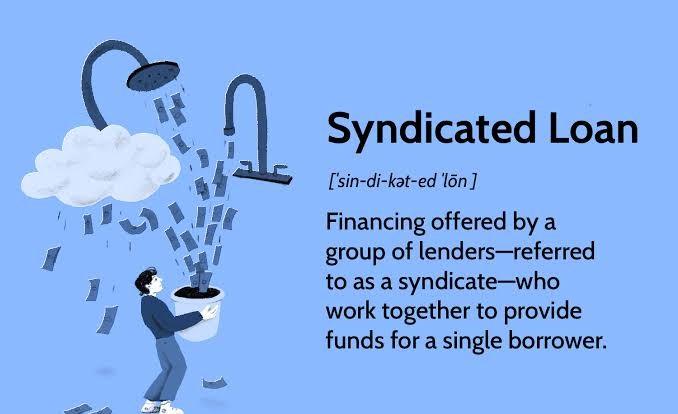
The secondary trading environment for syndicated credit facilities has traditionally faced criticism for slow settlement cycles, reliance on manual documentation, and fragmented communication channels between administrative agents, buyers, and sellers. Unlike equity or listed bond markets that settle electronically within short windows, secondary bank loan settlements historically required weeks due to complex assignment agreements, know-your-customer (KYC) verifications, and agent bank sign-offs. Emerging digital transformation initiatives are fundamentally altering these operational workflows. Investigating contemporary Syndicated Loans market trends underlines how distributed ledger technology (DLT), smart contracts, and standardized electronic trading platforms are streamlining trade matching, shortening settlement times, and significantly reducing operational frictional costs for institutional investors.
Digitization also enhances pricing transparency and portfolio monitoring across syndicated credit portfolios. Automated agent portals now provide real-time visibility into interest rate resets, covenant compliance certificates, borrowing base calculations, and principal repayment schedules. By replacing legacy email exchanges with secure API-driven platforms, financial institutions minimize operational errors and improve administrative efficiency. Moreover, the integration of artificial intelligence and machine learning algorithms assists credit analysts in rapidly extracting critical clauses from voluminous loan agreements, enabling faster risk assessment during secondary trading decisions. As secondary loan liquidity becomes increasingly vital for institutional asset managers, the continuous modernization of technology infrastructure will remain an imperative for market participants.
Frequently Asked Questions
-
Why do syndicated loan trade settlements historically take longer than bond trades?
Loan trades require administrative agent approvals, formal legal assignment agreements, manual KYC checks, and custom transfer documentation, which prolong processing times compared to standardized clearinghouses.
-
How does smart contract technology improve syndicated loan management?
Smart contracts can automate administrative tasks such as interest calculations, payment distributions, fee processing, and real-time reporting, reducing human error and settlement delays.
➤➤➤Explore MRFR’s Related Ongoing Coverage In Semiconductor Industry:
Flexible Hybrid Electronics Market

 English
 Arabic
 French
 Spanish
 Deutsch
 Turkish
 Dutch
Dutch
 Italiano
 Russian
 Romaian
 Portuguese (Brazil)
 Greek
Greek