


What is the History and Legacy of the Tudor Style Homes?
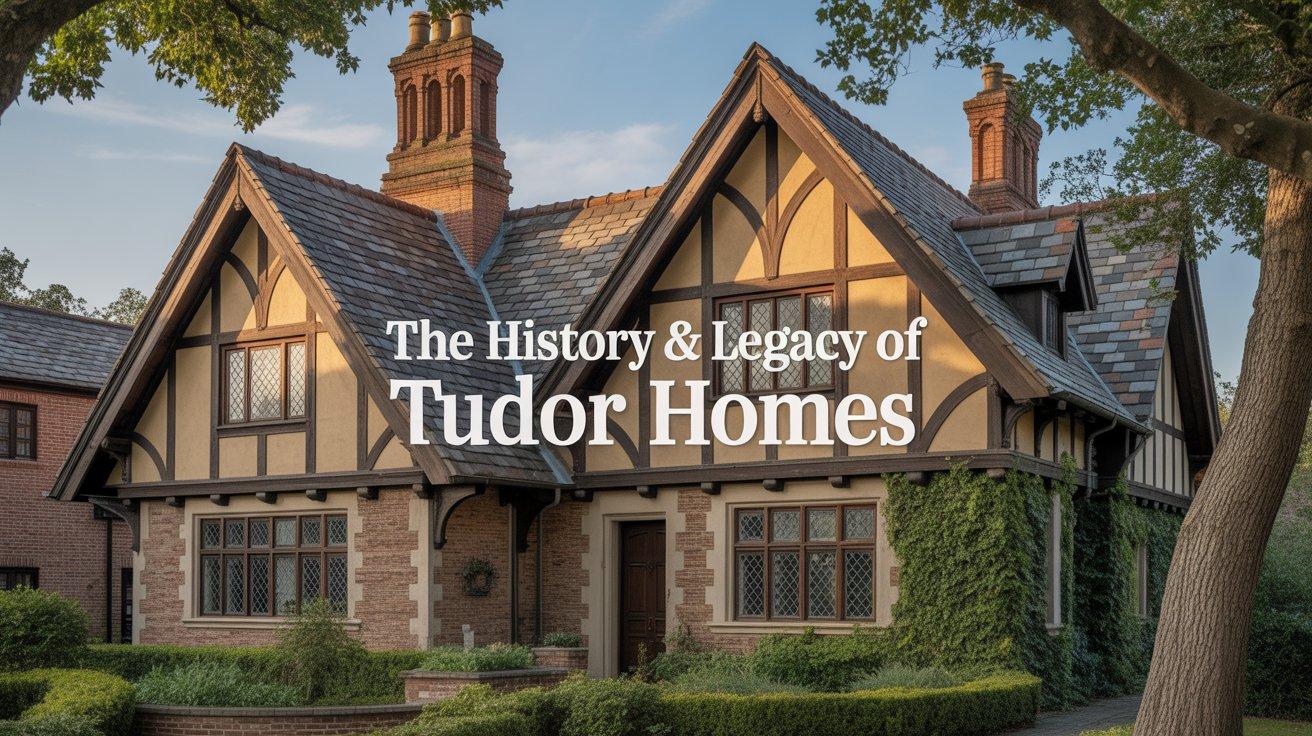
One of the most familiar and romantic residential architectural designs that are recognized in the world is the Tudor-style homes. Their high-pitched roof, ornamental half-timbering, high chimneys, and fairy-tale style give these houses the impression of an old-world refinement that appeals to their owners even after several centuries.
However, Tudor houses are not merely impressive structures. They are a rich architectural heritage that is created due to social transformation, artisans and cultural renaissance. In order to fully enjoy their beauty nowadays, one should know the origin of Tudor-style houses and the way they have changed with time.
History of Tudor Architecture
The Tudor style of architecture was developed in England, at the end of the 15 th century, in the late medieval period. It is named after the Tudor dynasty that governed England between 1485 and 1603, with the first and the last members being King Henry VII and Queen Elizabeth I.
It was a period when medieval Gothic architecture was shifting towards early Renaissance. Housing that was constructed in this period was both functional and symbolic, with defensive aspects of the medieval era mixed with more ornamental ones as the society grew more secure.
Social Background of the Tudor Age
During the Tudor period:
- Economic growth was experienced in England.
- The feudal system was on the decline.
- Rich business people and landlords came into existence.
- Homes turned into an icon of wealth as opposed to reinforcement.
Consequently, the shift of architecture in residential houses was castles and manor houses to more comfortable and aesthetically satisfying homes - the basis of the Tudor-style homes.
Important Characteristics of Early Tudor Homes
Tudor houses were constructed using the materials that were nearby thus strongly affecting their design and architecture. The following are some of its defining features:
1. Half-Timbered Construction
Half-timbering is one of the most typical examples of Tudor houses, in which the wooden beams are used to create decorations on the outer walls.
The intervals between the beams were occupied by:
- Wattle and daub
- Brick
- Plaster
- This was a structural and ornamental technique.
2. Steeply Pitched Roofs
The roofs of Tudor houses were often steep and gabled, which was suitable to allow the rain and snow to fall off. The houses were made with thatch or clay tiles on these roofs.
3. Tall, Ornate Chimneys
With the introduction of fireplaces into the household, chimneys became more elaborate and extensive. One way of displaying wealth and craftsmanship was by having tall chimneys.
4. Small-Paned Windows
- During the Tudor period, glass was very costly, therefore, the windows were:
- Narrow
- Tall
- The wooden or lead frame divides them into numerous small panes.
5. Asymmetrical Design
As opposed to subsequent architectural designs, the Tudor houses were not symmetrical and thus had an appealing organic look.
The Deterioration of the Original Tudor Architecture.
Towards the early 17 th century, changes in architectural tastes were witnessed. There was a greater influence of Renaissance and classical, focusing on symmetry, proportion and construction of stone.
As a result:
- Historical Tudor building slowly died.
- Georgian and classical styles were followed in new homes.
- Early Tudor houses were turned in historical landmarks and not ordinary houses.
- But the history of Tudor buildings was not finished yet.
The Tudor Revival Movement
The Tudor Revival (or the Mock Tudor) was a style that developed in the late 19th and early 20th centuries, especially in England and the United States.
Why Tudor Revival became Famous
- A number of things led to the revival:
- Dreaming about the medieval craftsmanship.
- Output backlash to industrialization.
- Longing to romantic, home made beauty.
- Impulse of Arts and Crafts movement.
People wanted houses that were warm, intimate and traditional, and that Tudor-style houses would be ideal in this aspect.
The Tudor Style Homes in the United States
The Tudor-style houses became very popular in the U.S. between 1890 and 1940 particularly in the suburban developments.
Where They Became Common
- You will always see Tudor houses in:
- Northeastern states
- Midwest suburbs
- Historic quarters of huge cities.
They were particularly favored by average and high-income families who desired unique, classy houses.
Adjustment to Modern Construction
This was in contrast to original Tudor houses that were used in America which were known as American Tudor Revival homes.
- Brick and stone rather than wattle and daub.
- Decorative (non-structural) half-timbering.
- Modern plumbing, heating and electrical systems.
This was enabling the home owners to have Tudor looks without compromising comfort.
The Tudor Homes Characteristics- interiors
The interior of Tudor-style houses displays the aspect of warmth, craftsmanship, and coziness.
Common Interior Features
- Bare wooden beams of the ceiling.
- Arched doorways
- Hardwood floors
- Fireplaces as focal points
- Built-in cabinetry and nooks
Charm and tradition The rooms tend to be smaller and cozier than in open-plan modern structures, which makes the impression of charm and tradition.
Miscellany of Tudor-style houses
Tudor houses have made a permanent mark in the history of architecture and the popular media.
Symbol of Storybook Living
Due to their fairy-tale outlook, Tudor homes frequently are linked with:
- Old English villages
- Romantic literature
- Historic dramas
- Timeless elegance
They are often used in movies, television programs, and drawings to bring in the feeling of nostalgia and intimacy.
Enduring Appeal
The Tudor-style homes are still welcome regardless of the changing fashions since they:
- Be different to the cliché designs.
- Feel unique and handcrafted
- Offer historical character
- Bend into scenic environments.
- Tudor Homes in Modern Times
Tudor-inspired houses are still being restored, preserved or constructed by many homeowners today.
Preservation Efforts
- Historic Tudor homes usually are:
- Protected by heritage laws
- It is painstakingly reconstructed in old materials.
- Refurbished in-house and maintained outward.
Contemporary Tudor-Influenced Designs
New builds may incorporate:
- Steep gables
- Brick and stone façades
- Simplified half-timbering
- Insulation and energy-efficient windows.
This is a combination that enables the Tudor legacy to be carried on in a modern setting.
Problems of having a Tudor Home
Although lovely, Tudor houses have their downs:
- Timber detailing maintenance.
- Repair costs for steep roofs
- The small rooms might not be accommodating to every lifestyle.
- Elderly houses can be in need of structural modifications.
- Nevertheless, a great number of owners believe that the nature and appeal greatly supersede these obstacles.
The Reason Tudor Style Homes Are Not a Waste
The Tudor houses are not merely the style of architecture, but also the bridge to the past, the craft, and the national identity. They take us back to a period when houses were constructed with a purpose, care and character.
The popularity they have managed to sustain shows that good design is timeless.
Conclusion
The heritage and history of the homes under Tudor style covers centuries, continents and cultural movements. Since their beginning in the medieval English country homes have held a special niche in architectural history, and continue to do so in the modern suburbs.
Their unique design, fine workmanship and their storybook appeal still appeal to the homeowners who prefer tradition, character and eternal beauty. Tudor houses remain one of the timeless buildings of architectural art and tradition in an era of fast building and minimalism.

 Arabic
 French
 Spanish
 Portuguese
 Deutsch
 Turkish
 Dutch
Dutch
 Italiano
 Russian
 Romaian
 Portuguese (Brazil)
 Greek
Greek