1. Understanding Postpartum Recovery
The postpartum period, often called the "fourth trimester," begins immediately after childbirth and generally lasts for about six weeks. However, complete recovery can take several months or even longer depending on the individual.
Every woman's experience is unique. Factors such as delivery method, overall health, age, and emotional support influence how quickly recovery occurs.
Key points:
- Recovery takes time.
- Physical and emotional healing happen together.
- Self-care is essential for long-term health.
## 2. Physical Changes After Childbirth
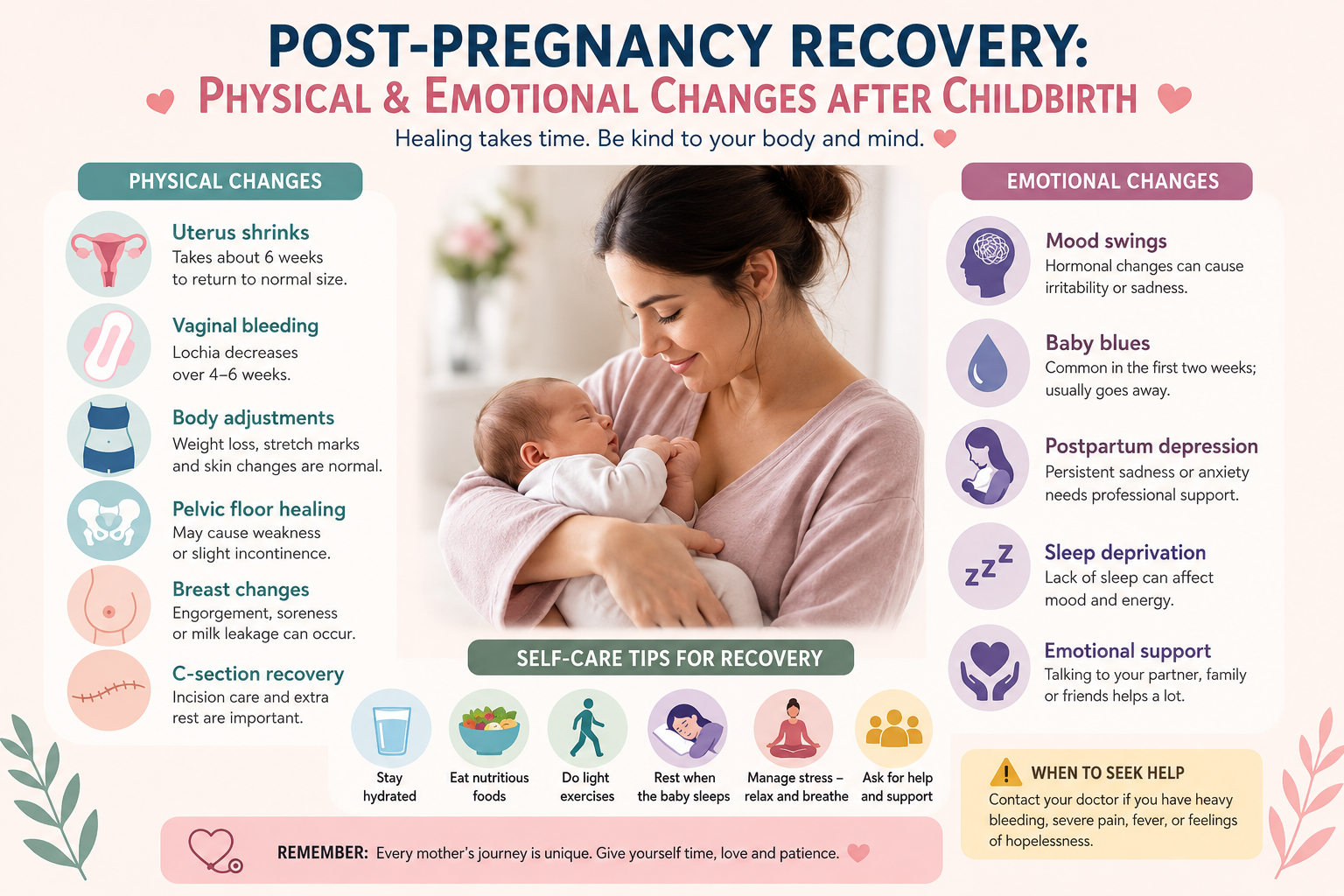
After delivery, your body begins the process of returning to its pre-pregnancy state. This transition can involve numerous physical changes.
Common Physical Changes
Uterine Contractions
Your uterus gradually shrinks back to its normal size. This process, known as involution, may cause cramp-like sensations.
Weight Changes
Many women lose a significant amount of weight immediately after delivery, but losing the remaining pregnancy weight may take months.
Body Aches
The muscles used during labor can remain sore for days or weeks.
Swelling
Fluid retention during pregnancy may cause temporary swelling in the hands, feet, and face.
## 3. Vaginal Bleeding and Discharge
After childbirth, women experience vaginal bleeding known as lochia.
What to Expect
- Heavy bleeding during the first few days
- Gradual reduction in flow
- Color changes from bright red to pink, brown, and eventually yellow-white
This discharge can continue for up to six weeks.
When to Be Concerned
Contact your healthcare provider if you notice:
- Large blood clots
- Extremely heavy bleeding
- Foul-smelling discharge
- Fever
## 4. Healing After Vaginal Delivery
Women who have a vaginal birth often experience soreness around the perineum.
Common Issues
Perineal Pain
Tears or episiotomy incisions can cause discomfort.
Hemorrhoids
Straining during labor may lead to swollen veins around the rectum.
Urinary Leakage
Temporary bladder weakness is common after delivery.
Recovery Tips
- Use ice packs as recommended.
- Practice pelvic floor exercises.
- Stay hydrated.
- Avoid heavy lifting.
## 5. Recovery After a Cesarean Section
A cesarean section is major abdominal surgery and requires additional healing time.
What Mothers May Experience
- Incision pain
- Limited mobility
- Fatigue
- Increased risk of infection
Recovery Guidelines
Rest Whenever Possible
Your body needs energy to heal.
Follow Wound Care Instructions
Keep the incision area clean and dry.
Avoid Heavy Activities
Most doctors recommend avoiding strenuous exercise for several weeks.
Patience is essential because recovery from a C-section often takes longer than recovery from a vaginal birth.
## 6. Breast Changes and Breastfeeding Challenges
Breastfeeding can be rewarding but also challenging, especially during the first few weeks.
Common Breast Changes
Breast Engorgement
Breasts may become swollen and tender as milk production increases.
Sore Nipples
Improper latching can cause discomfort.
Milk Leakage
Unexpected milk leakage is completely normal.
Breastfeeding Tips
- Ensure proper latch techniques.
- Feed regularly.
- Stay hydrated.
- Seek lactation support when needed.
Remember, every breastfeeding journey is different, and it's okay to ask for help.
## 7. Hormonal Changes After Childbirth
Pregnancy hormones drop dramatically after delivery.
Effects of Hormonal Changes
- Mood swings
- Irritability
- Night sweats
- Hair loss
- Changes in libido
These fluctuations are a normal part of recovery and usually stabilize over time.
## 8. Emotional Adjustments and Mood Swings
Becoming a parent brings excitement, but it can also create feelings of uncertainty.
Why Emotional Changes Occur
Several factors contribute:
- Hormonal shifts
- Lack of sleep
- New responsibilities
- Physical exhaustion
Many mothers experience moments of self-doubt, anxiety, or overwhelm.
Healthy Coping Strategies
- Talk openly with loved ones.
- Accept help when offered.
- Set realistic expectations.
- Take short breaks for self-care.
## 9. Understanding Baby Blues and Postpartum Depression
Many people confuse baby blues with postpartum depression, but they are not the same.
Baby Blues
Usually appear within the first few days after birth.
Symptoms Include:
- Tearfulness
- Mood swings
- Irritability
- Feeling overwhelmed
These symptoms typically improve within two weeks.
Postpartum Depression
Postpartum depression is more serious and requires professional attention.
Symptoms Include:
- Persistent sadness
- Loss of interest in activities
- Feelings of hopelessness
- Difficulty bonding with the baby
- Changes in appetite
Seeking medical support early can significantly improve recovery.
## 10. Sleep Deprivation and Fatigue
Newborns require frequent feeding and care, making sleep a rare luxury for many parents.
Impact of Sleep Deprivation
- Reduced concentration
- Mood changes
- Physical exhaustion
- Increased stress
Ways to Improve Rest
Sleep When the Baby Sleeps
This advice may sound cliché, but it truly helps.
Share Responsibilities
Partners and family members can provide valuable support.
Avoid Overcommitting
Focus on essential tasks and let non-urgent chores wait.
## 11. Nutrition for Postpartum Recovery
Nutrition plays a crucial role in healing and energy restoration.
Essential Nutrients
Protein
Supports tissue repair.
Iron
Helps replenish blood loss from delivery.
Calcium
Supports bone health.
Fiber
Prevents constipation.
Healthy Food Choices
- Fruits and vegetables
- Whole grains
- Lean proteins
- Dairy products
- Nuts and seeds
Adequate hydration is equally important, especially for breastfeeding mothers.
## 12. Exercise and Physical Activity
Returning to exercise should happen gradually and with medical approval.
Benefits of Postpartum Exercise
- Improves mood
- Boosts energy levels
- Strengthens muscles
- Supports weight management
Safe Activities
Walking
One of the safest and easiest ways to start.
Pelvic Floor Exercises
Help strengthen weakened muscles.
Gentle Stretching
Improves flexibility and reduces stiffness.
Always listen to your body and avoid pushing yourself too hard.
## 13. Importance of Social Support
No one should navigate postpartum recovery alone.
Sources of Support
- Partner
- Family members
- Friends
- Support groups
- Healthcare providers
Strong support systems can reduce stress and improve emotional well-being.
Why Support Matters
Mothers who feel supported often report:
- Better mental health
- Greater confidence
- Easier adjustment to parenthood
Asking for help is a sign of strength, not weakness.
## 14. When to Seek Medical Help
While many postpartum symptoms are normal, some require immediate attention.
Contact Your Doctor If You Experience:
- High fever
- Severe abdominal pain
- Heavy bleeding
- Chest pain
- Difficulty breathing
- Persistent depression or anxiety
- Thoughts of self-harm
Early intervention can prevent complications and support faster recovery.
## 15. Tips for a Healthy Recovery Journey
Every recovery journey is unique, but certain habits can make the process smoother.
Practical Recovery Tips
Prioritize Rest
Your body heals best when adequately rested.
Eat Nutritious Foods
Proper nutrition fuels recovery.
Stay Hydrated
Water supports healing and breastfeeding.
Attend Follow-Up Appointments
Regular checkups ensure recovery is progressing normally.
Practice Self-Compassion
You don't have to be a perfect parent. Give yourself grace during this transition.
Women who have undergone fertility treatments and worked with the best ivf specialist in new delhi may feel additional emotional pressure after childbirth. Remember that recovery deserves as much attention as pregnancy itself.
## Conclusion
Post-pregnancy recovery is a complex yet natural process that involves both physical healing and emotional adjustment. From hormonal fluctuations and body changes to sleep deprivation and mood shifts, new mothers face numerous challenges during the postpartum period. Understanding these changes can reduce anxiety and help women feel more prepared for the journey ahead.
The most important thing to remember is that recovery is not a race. Every mother heals at her own pace. Whether your baby arrived naturally or through fertility treatment guided by the best ivf specialist in new delhi, prioritizing rest, nutrition, emotional support, and medical care can help you navigate this transformative chapter with confidence and strength.
## Frequently Asked Questions (FAQs)
1. How long does postpartum recovery usually take?
Most women experience significant recovery within six weeks, but complete physical and emotional healing may take several months depending on individual circumstances.
2. Is it normal to feel emotional after childbirth?
Yes. Hormonal changes, sleep deprivation, and lifestyle adjustments commonly cause emotional ups and downs during the postpartum period.
3. When can I start exercising after delivery?
Light activities such as walking can often begin within days, but you should always follow your healthcare provider's recommendations before starting any exercise routine.
4. How can I tell the difference between baby blues and postpartum depression?
Baby blues typically improve within two weeks, while postpartum depression lasts longer and may involve persistent sadness, hopelessness, and difficulty bonding with the baby.
5. Why is postpartum care important after IVF pregnancy?
Women who conceive through IVF may experience the same postpartum changes as other mothers. Proper recovery care, along with guidance from the best ivf specialist in new delhi and healthcare team, supports both physical healing and emotional well-being.




 English
 Arabic
 French
 Spanish
 Deutsch
 Turkish
 Dutch
Dutch
 Italiano
 Russian
 Romaian
 Portuguese (Brazil)
 Greek
Greek