


The Intelligent Edge: An In-depth Introduction to the Global Mobile AI Industry
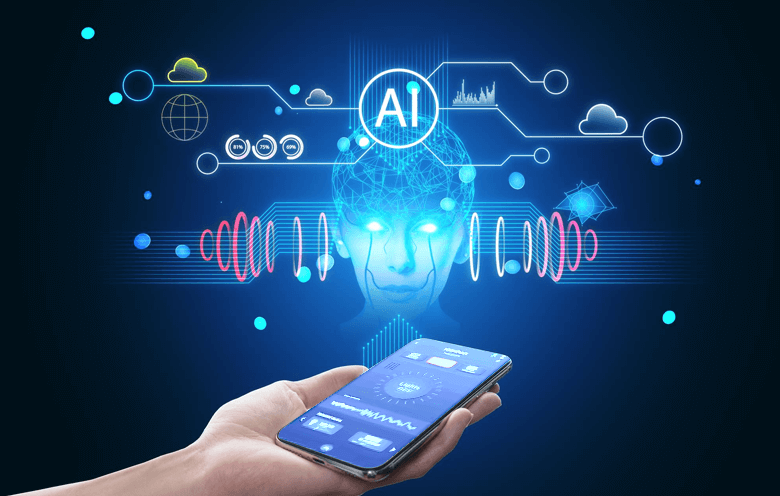
In the modern digital era, the smartphone has evolved from a simple communication device into a powerful pocket-sized computer, and its next great transformation is being driven by artificial intelligence. This evolution is at the heart of the dynamic and revolutionary Mobile AI industry, a critical sector focused on embedding and executing artificial intelligence workloads directly on mobile devices like smartphones, tablets, and wearables. Unlike cloud-based AI, which processes data on remote servers, Mobile AI, or "Edge AI," performs tasks locally on the device's own specialized processors. This industry encompasses the entire technology stack required to make this possible, from the design of energy-efficient AI-accelerator chips and the development of optimized software frameworks to the creation of intelligent applications that leverage this on-device power. Its fundamental purpose is to make our devices faster, more responsive, more context-aware, and more private, powering a new generation of truly smart, personal computing experiences, from real-time language translation and computational photography to proactive virtual assistants and immersive augmented reality.
The ecosystem of the Mobile AI industry is a complex and deeply interconnected network of semiconductor designers, device manufacturers, software platform owners, and application developers. At the foundational hardware layer are the System-on-a-Chip (SoC) designers like Qualcomm (with its Snapdragon and Hexagon processors), Apple (with its A-series Bionic chips and Neural Engine), MediaTek, and Samsung (with its Exynos chips). These companies are in a fierce race to design the most powerful and energy-efficient AI accelerator hardware, which is the silicon brain of Mobile AI. The second crucial layer consists of the major device manufacturers—Apple, Samsung, Google, and others—who integrate these chips into their smartphones and other mobile products. The third layer is comprised of the operating system and software platform owners, primarily Google (with Android and its TensorFlow Lite framework) and Apple (with iOS and its Core ML framework). They provide the software tools and APIs that allow developers to access and utilize the underlying AI hardware. Finally, a vast and vibrant ecosystem of app developers leverages these tools to create the innovative, AI-powered applications that bring the technology to life for end-users.
The technological foundation of the Mobile AI industry is centered on the challenge of running complex deep learning models within the tight power and thermal constraints of a mobile device. The key innovation has been the development of specialized hardware accelerators known as Neural Processing Units (NPUs), Neural Engines, or AI processors. These are dedicated circuits within the main mobile SoC that are specifically designed to perform the massive number of parallel mathematical operations (primarily matrix multiplications) required by neural networks, but at a fraction of the power consumption of a general-purpose CPU or even a mobile GPU. Complementing this hardware is a suite of specialized software tools. This includes model optimization techniques like quantization (reducing the precision of the numbers in a model) and pruning (removing unnecessary connections) to make the AI models smaller and faster. It also includes software frameworks like TensorFlow Lite, PyTorch Mobile, and Apple's Core ML, which provide a bridge between the AI models developed by data scientists and the specialized hardware on the device, ensuring that the software can run efficiently on the silicon.
The overall impact of the Mobile AI industry is a profound shift in how we interact with technology, making our devices more personal, intuitive, and capable. One of the most significant impacts is on the smartphone camera. Computational photography, powered by on-device AI, enables features like portrait mode with realistic background blur, night mode for stunning low-light shots, and real-time video enhancement, all of which are performed instantly on the device. For communication, Mobile AI powers real-time on-device speech recognition and language translation, allowing for seamless conversations without an internet connection. It is the engine behind proactive virtual assistants that can learn a user's habits and anticipate their needs. Crucially, by performing these tasks on the device, Mobile AI significantly enhances user privacy and security, as sensitive personal data (like biometric information or personal photos) never has to leave the phone to be processed in the cloud. This on-device processing also results in lower latency and a more responsive user experience, which is critical for applications like augmented reality and real-time gaming.
Explore More Like This in Our Reports:

 English
 Arabic
 French
 Spanish
 Portuguese
 Turkish
 Dutch
Dutch
 Italiano
 Russian
 Romaian
 Portuguese (Brazil)
 Greek
Greek