


How to Read UTC Now Correctly
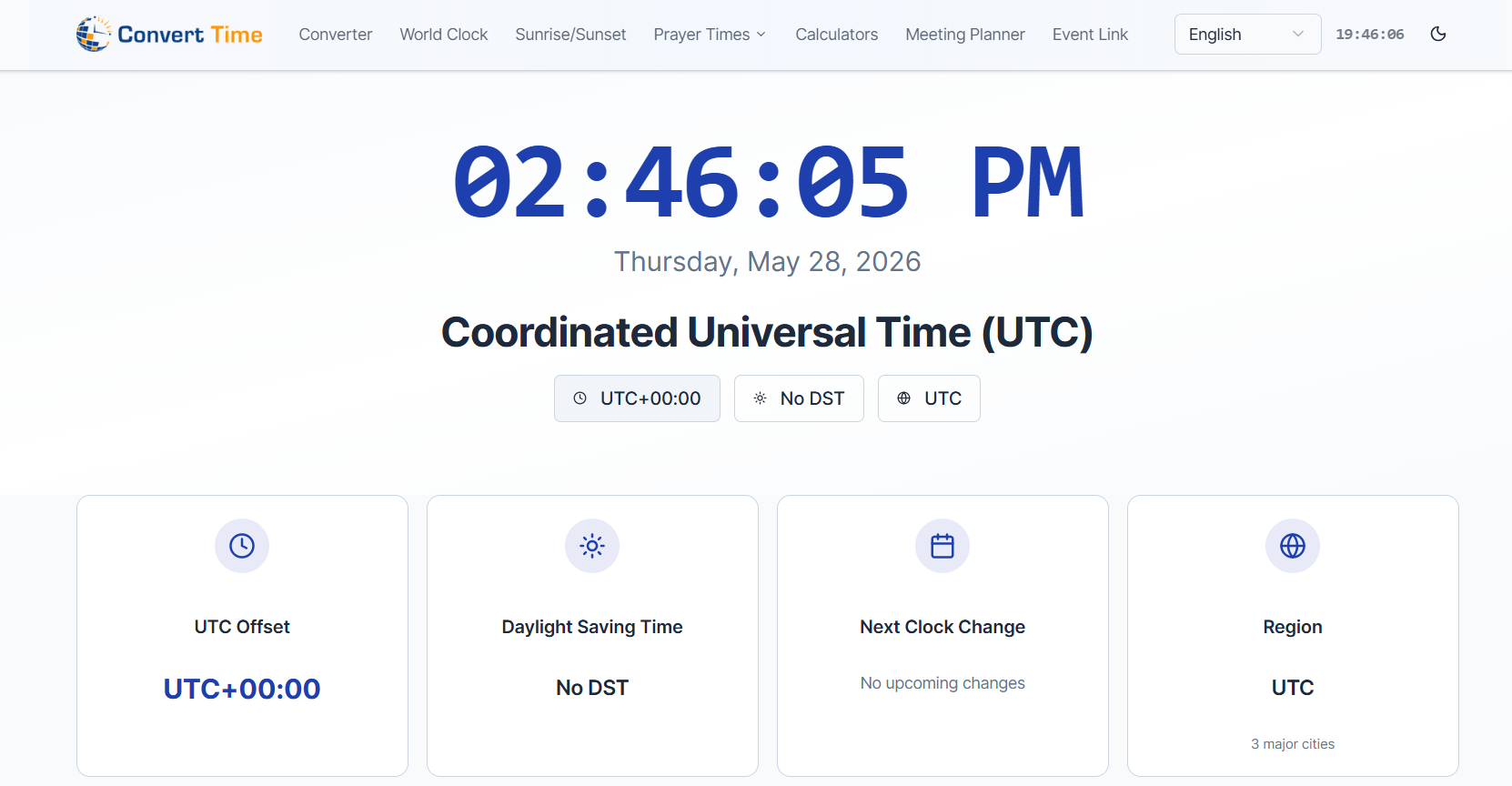
In today’s connected world, many people need to understand time across different countries and time zones. Whether you are joining an online meeting, checking a server log, attending a webinar, tracking a flight, or working with an international client, you may see time written in UTC. One common search term people use is UTC now, which means the current time in Coordinated Universal Time. To avoid confusion, it is important to know how to read UTC now correctly.
UTC stands for Coordinated Universal Time. It is the global time standard used around the world. Every local time zone is based on UTC, either ahead of it or behind it. Once you understand how UTC works, reading UTC now becomes simple and helpful for global planning.
What Does UTC Now Mean?
UTC now means the current time in UTC at this exact moment. It is not your local time unless your country or region follows UTC+0. UTC is used as a universal reference, so people in different countries can compare time clearly.
For example, Pakistan Standard Time is UTC+5. This means Pakistan is 5 hours ahead of UTC. If UTC now is 10:00 AM, then the current time in Pakistan is 3:00 PM.
If another country follows UTC-4, it means that location is 4 hours behind UTC. If UTC now is 10:00 AM, then the local time there is 6:00 AM.
This is the basic rule for reading UTC now correctly: know the current UTC time and then apply your local time zone offset.
Why Reading UTC Now Correctly Matters
Reading UTC correctly matters because time zone mistakes can create real problems. A meeting may be missed, a deadline may be misunderstood, a flight schedule may be confusing, or a software log may be read incorrectly.
For example, if an online event starts at 6:00 PM UTC, someone in Pakistan must convert that to 11:00 PM Pakistan time. If they forget to add the 5-hour offset, they may join at the wrong time.
UTC now helps people and systems use one shared time reference. This is especially important for remote teams, global businesses, developers, travelers, online event organizers, and anyone working across countries.
Understanding UTC Time Format
UTC time may appear in different formats. Sometimes it is written in a simple 12-hour format, such as:
10:00 AM UTC
This means it is 10 in the morning according to Coordinated Universal Time.
UTC may also appear in 24-hour format, especially in technical systems, aviation, servers, databases, and international schedules. For example:
14:00 UTC
This means 2:00 PM UTC.
In software systems, you may see UTC written in a date-time format like:
2026-05-28 14:30 UTC
This means May 28, 2026, at 2:30 PM UTC.
You may also see a format like:
2026-05-28T14:30:00Z
The letter Z means Zulu time, which is another name for UTC. This format is commonly used in APIs, databases, server logs, and technical records.
Reading UTC Now in 24-Hour Format
Many UTC tools show time in 24-hour format. If you are used to AM and PM, this may look confusing at first. But it is easy once you understand the pattern.
00:00 UTC means 12:00 midnight UTC.
06:00 UTC means 6:00 AM UTC.
12:00 UTC means 12:00 noon UTC.
15:00 UTC means 3:00 PM UTC.
18:00 UTC means 6:00 PM UTC.
21:00 UTC means 9:00 PM UTC.
So, if UTC now is shown as 17:00 UTC, it means 5:00 PM UTC. After that, you can convert it into your local time zone.
How to Convert UTC Now to Your Local Time
To read UTC now correctly, you need to know your local UTC offset. A UTC offset shows how far your local time is from UTC.
If your location is ahead of UTC, you add the offset. If your location is behind UTC, you subtract the offset.
For example, if UTC now is 9:00 AM and you are in Pakistan, you add 5 hours because Pakistan is UTC+5. So the local time becomes 2:00 PM.
If UTC now is 9:00 AM and your location is UTC-4, you subtract 4 hours. So the local time becomes 5:00 AM.
If your time zone is UTC+5:30, like India, you add 5 hours and 30 minutes. So 9:00 AM UTC becomes 2:30 PM local time.
Always Check the Date Too
One common mistake people make when reading UTC now is focusing only on the time and ignoring the date. When you convert UTC to local time, the date may change.
For example, if UTC now is 10:00 PM and your time zone is UTC+5, the local time becomes 3:00 AM the next day.
If UTC now is 2:00 AM and your time zone is UTC-5, the local time becomes 9:00 PM the previous day.
This is very important for meetings, travel schedules, online events, project deadlines, and software records. Always check both the time and the date when converting UTC.
UTC Now and Daylight Saving Time
UTC itself does not change for daylight saving time. It stays the same throughout the year. However, some local time zones do change during certain months.
For example, New York is usually UTC-5 during standard time and UTC-4 during daylight saving time. This means the time difference from UTC changes depending on the season.
Because of this, manual conversion can sometimes be risky. If you are converting UTC now for a city that follows daylight saving time, it is better to use an online UTC time converter. This helps you avoid mistakes.
Where You May See UTC Now
You may see UTC now in many places. Online time tools show current UTC time for quick conversion. Developers see UTC in server logs, databases, APIs, and error reports. Remote teams use UTC for meetings, deadlines, and project updates.
Travelers may see UTC in aviation systems and flight tracking tools. Event organizers use UTC for webinars, online classes, live streams, and global product launches. Businesses use UTC for reports, customer support, payments, and international operations.
Because UTC is used in so many areas, learning how to read it correctly is useful for both personal and professional life.
Tips to Read UTC Now Correctly
The first tip is to check whether the time is in 12-hour or 24-hour format. If you see 18:00 UTC, remember that it means 6:00 PM UTC.
The second tip is to know your time zone offset. For example, Pakistan is UTC+5, Dubai is UTC+4, and India is UTC+5:30.
The third tip is to check the date after conversion. The local date may become the next day or the previous day.
The fourth tip is to use a reliable online UTC converter when daylight saving time is involved. This is especially helpful for cities in the United States, Europe, Canada, and Australia.
Conclusion
Reading UTC now correctly is simple when you understand the basic rules. UTC now means the current time in Coordinated Universal Time. It works as the global time reference for all time zones.
To read it correctly, check the UTC time, understand the format, know your local UTC offset, add or subtract the time difference, and confirm whether the date changes. Also remember that UTC does not change for daylight saving time, but some local time zones do.
In simple words, UTC now helps you understand global time clearly. Whether you are joining a meeting, checking a deadline, reading a server log, planning travel, or attending an online event, knowing how to read UTC now correctly can help you avoid time zone confusion and stay on schedule.

 English
 Arabic
 French
 Spanish
 Portuguese
 Deutsch
 Turkish
 Dutch
Dutch
 Italiano
 Russian
 Portuguese (Brazil)
 Greek
Greek