


Land Monetisation in India 2026 | Complete Guide to Unlock Land Value
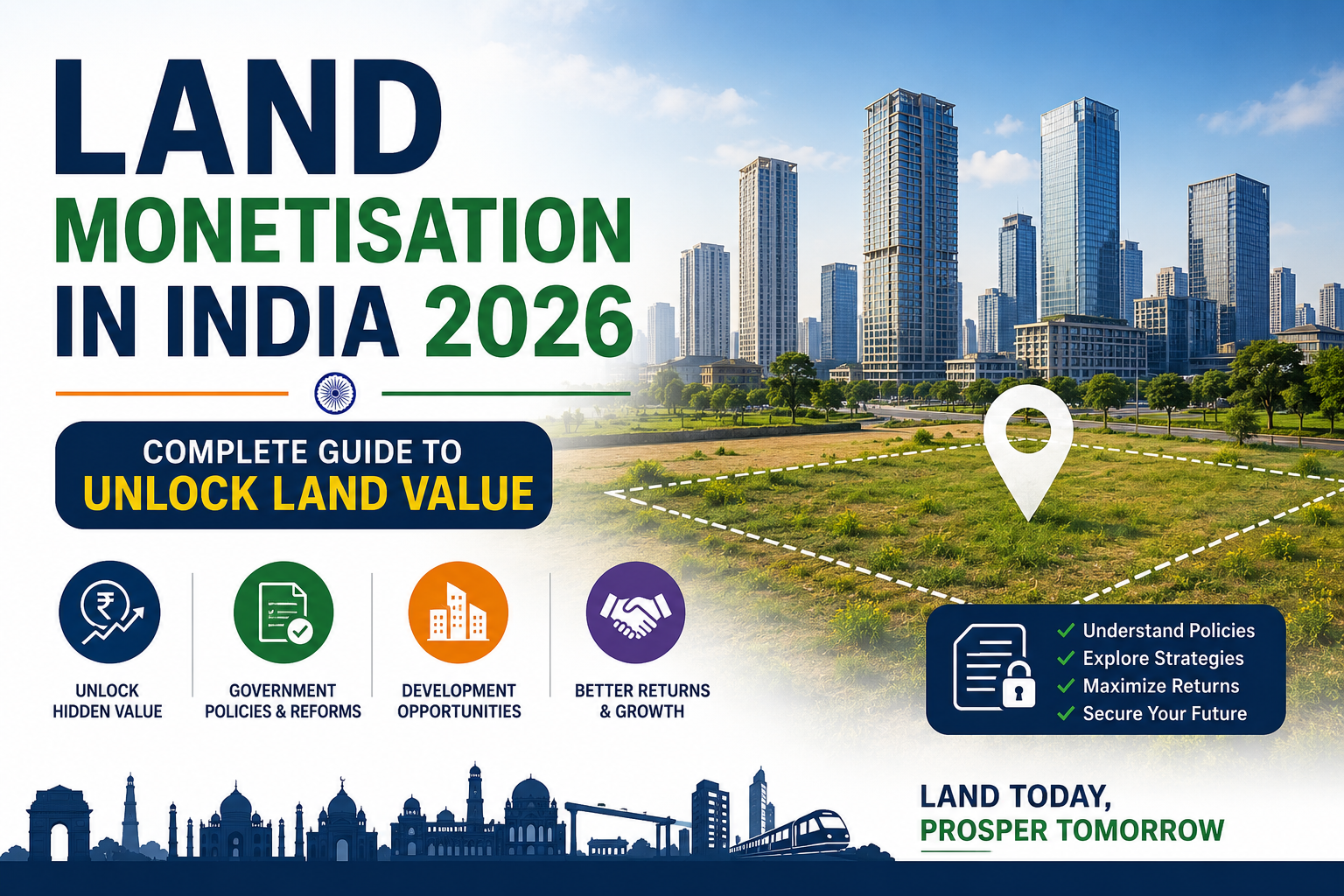
Land Monetisation in India: Complete Guide to Unlock Capital from Land Assets
India’s real estate and infrastructure sectors are rapidly evolving, and one concept gaining massive attention is Land Monetisation. Across the country, landowners, developers, corporations, and government agencies are exploring smarter ways to generate capital from unused or underutilized land assets without necessarily selling them outright.
In 2026, land monetisation has become one of the most important financial strategies for infrastructure growth, business expansion, and wealth creation. The Indian government’s National Monetisation Pipeline (NMP 2.0) is expected to unlock massive infrastructure and land-related value over the next few years.
This guide explains everything you need to know about Land Monetisation in India, including its meaning, benefits, methods, legal considerations, risks, and future opportunities.
What is Land Monetisation?
Land monetisation refers to the process of converting land assets into financial value. Instead of keeping land idle, owners use strategic methods to generate revenue, raise capital, attract investment, or create recurring income streams.
Land monetisation does not always mean selling land. In many cases, landowners retain ownership while still earning profits through leasing, development partnerships, joint ventures, or structured financing.
In simple terms, land monetisation transforms “dead assets” into productive financial resources.
Why Land Monetisation is Growing in India
India possesses enormous land assets owned by:
- Private landowners
- Corporates
- Industrial groups
- Government agencies
- Railways
- Ports
- Infrastructure authorities
- Public sector undertakings
However, a significant portion of these lands remains unused or underutilized. Rising infrastructure investments, urbanization, and industrial growth are pushing stakeholders to unlock the hidden value of land assets.
Recent infrastructure financing models in India increasingly rely on land monetisation to reduce debt pressure and generate funding for new projects.
Government-backed asset monetisation initiatives under NMP 2.0 are expected to generate more than ₹16 lakh crore by 2030.
Key Benefits of Land Monetisation
1. Unlocks Hidden Capital
Unused land can become a major financial asset. Monetisation helps owners raise funds without selling core holdings permanently.
2. Generates Passive Income
Leasing or revenue-sharing agreements create recurring income streams from land assets.
3. Supports Business Expansion
Businesses can use monetised land value to fund operations, expansion, debt restructuring, or infrastructure development.
4. Increases Asset Productivity
Idle land creates no returns. Monetisation converts dormant assets into productive investments.
5. Retains Ownership
Many monetisation models allow owners to maintain long-term ownership while generating capital.
6. Enhances Land Value
Development projects often increase the market value of surrounding land parcels.
Common Types of Land Monetisation in India
1. Joint Development Agreements (JDA)
A Joint Development Agreement is one of the most popular land monetisation models in India.
In this arrangement:
- The landowner contributes land
- The developer handles construction and project execution
- Profits or developed units are shared between both parties
Benefits:
- No large upfront investment by landowners
- Shared project risks
- Higher long-term returns
- Suitable for urban and semi-urban areas
2. Long-Term Leasing
Landowners lease their land to:
- Warehousing companies
- Industrial operators
- Logistics firms
- Retail brands
- Hospitality groups
- Solar power projects
This model provides stable rental income while ownership remains intact.
Best for:
- Highway-facing land
- Industrial corridors
- Commercial zones
- Agricultural land with conversion potential
3. Sale and Leaseback
In this model:
- The land or property is sold to investors
- The original owner continues using the property through a lease agreement
This helps businesses unlock immediate liquidity while maintaining operational continuity.
4. Infrastructure Development Partnerships
Government agencies increasingly monetize land for:
- Metro projects
- Commercial complexes
- Transit hubs
- Smart city developments
- Mixed-use infrastructure
Public land is becoming a structured funding source for infrastructure financing in India.
5. Real Estate Development
Landowners partner with builders for:
- Residential townships
- Commercial buildings
- Retail projects
- Integrated developments
This is especially common in rapidly urbanizing regions.
6. Land Banking and Strategic Holding
Some investors acquire land in growth corridors and monetize it later through:
- Plotting
- Commercial conversion
- Institutional leasing
- Industrial development
Many investors in India now view land banking as a long-term wealth creation strategy.
Government Role in Land Monetisation
The Indian government has significantly accelerated asset and land monetisation initiatives.
National Monetisation Pipeline (NMP)
The National Monetisation Pipeline was introduced to unlock value from public infrastructure assets.
NMP 2.0 aims to monetise over 2,000 assets across multiple sectors including:
- Highways
- Railways
- Ports
- Power transmission
- Warehousing
- Urban infrastructure
The government targets more than ₹16.7 lakh crore in monetisation between FY2026–2030.
Land Monetisation Opportunities in India
1. Industrial Corridors
Industrial expansion is creating demand for:
- Manufacturing zones
- Logistics parks
- Warehouses
- Data centers
Land near highways and freight corridors holds high monetisation potential.
2. Renewable Energy Projects
Solar and wind energy companies require large land parcels for project development.
Long-term leasing for renewable energy projects has become increasingly profitable.
3. Urban Redevelopment
Metro cities are seeing strong demand for:
- Mixed-use developments
- Commercial hubs
- Affordable housing
- Transit-oriented projects
Urban land monetisation is expected to grow rapidly over the next decade.
4. Tourism and Hospitality
Landowners near tourist destinations can monetize land through:
- Resorts
- Hotels
- Eco-tourism projects
- Farm stays
Legal Considerations in Land Monetisation
Before monetising land, owners must carefully evaluate legal aspects.
Clear Land Title
Ensure:
- Ownership documents are updated
- Mutation records are correct
- No encumbrances exist
Land Use Classification
Agricultural land often requires conversion for commercial or residential use.
Improper land conversion can create legal disputes and demolition risks.
Regulatory Approvals
Approvals may include:
- Municipal permissions
- Environmental clearances
- Zoning approvals
- Development authority permissions
Proper Agreements
All monetisation transactions should involve:
- Legally drafted contracts
- Revenue-sharing structures
- Exit clauses
- Dispute resolution mechanisms
Professional legal guidance is essential.
Risks Associated with Land Monetisation
While land monetisation offers substantial benefits, it also carries certain risks.
1. Legal Disputes
Title disputes and unclear ownership records can delay projects.
2. Market Fluctuations
Real estate demand and land values may fluctuate based on economic conditions.
3. Regulatory Delays
Government approvals can slow down monetisation projects.
4. Developer Risks
Choosing unreliable developers or investors may create financial complications.
5. Liquidity Challenges
Raw land may take time to generate returns compared to other investments.
How to Successfully Monetise Land in India
Step 1: Conduct Land Assessment
Evaluate:
- Location
- Connectivity
- Market demand
- Zoning potential
- Future growth prospects
Step 2: Verify Legal Documentation
Ensure all legal records are clean and updated.
Step 3: Identify Monetisation Strategy
Choose the most suitable approach:
- Lease
- Joint venture
- Development
- Structured financing
- Sale and leaseback
Step 4: Financial Planning
Calculate:
- Expected returns
- Project costs
- Tax implications
- Revenue-sharing models
Step 5: Partner with Experts
Work with:
- Real estate consultants
- Legal advisors
- Financial experts
- Infrastructure specialists
Future of Land Monetisation in India
The future of land monetisation in India looks extremely promising.
Several factors are driving growth:
- Rapid urbanization
- Infrastructure expansion
- Smart city development
- Industrial growth
- Private investment participation
- Government monetisation policies
Experts believe land monetisation will become a major funding mechanism for infrastructure and real estate development over the next decade.
Additionally, increasing interest in REITs, InvITs, and structured asset financing is creating new monetisation opportunities.
Conclusion
Land Monetisation in India is no longer just a real estate trend — it has become a strategic financial tool for individuals, businesses, and governments.
Whether through leasing, joint development, infrastructure partnerships, or structured financing, landowners today have multiple ways to unlock capital without losing ownership of valuable assets.
As India continues its infrastructure and urban growth journey, monetising land assets will play a critical role in generating funding, improving asset productivity, and supporting long-term economic development.
For landowners, the key lies in choosing the right monetisation strategy, ensuring legal compliance, and partnering with experienced professionals who understand market dynamics.
The future belongs to those who can convert land from a passive holding into an active wealth-generating asset.

 English
 Arabic
 French
 Spanish
 Portuguese
 Deutsch
 Turkish
 Dutch
Dutch
 Italiano
 Russian
 Romaian
 Portuguese (Brazil)