


What Factors Affect Crop Spraying Accuracy And Coverage?
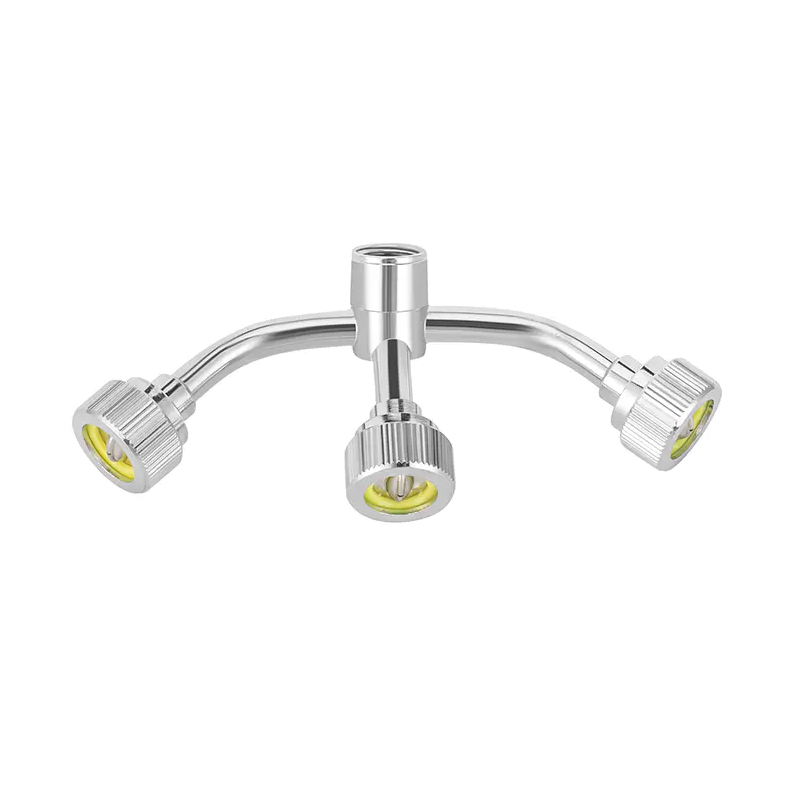
Agricultural Spray Gun and Agricultural High Pressure Spray Nozzle systems are widely used in modern farming operations where spraying efficiency, coverage uniformity, and water resource control directly affect crop management results. Farmers often face challenges such as uneven pesticide distribution, excessive chemical usage, and inconsistent spray penetration in dense crop areas. These issues can increase operational cost while reducing the effectiveness of pest and disease control.
Spraying efficiency is closely linked to nozzle pressure and droplet formation. When pressure is too low, liquid droplets become large and uneven, leading to poor coverage. When pressure is too high, overspray and drift may occur, reducing chemical utilization efficiency. An Agricultural High Pressure Spray Nozzle helps control droplet size more consistently by maintaining stable pressure output during operation.
Different crops require different spraying approaches. Leafy vegetables, fruit trees, and field grains all have different canopy structures. For example, dense crops may require higher penetration force to reach lower leaves, while open-field crops may focus more on surface coverage. Adjustable spray patterns allow operators to match spraying conditions with crop structure.
Water usage is another important concern in agricultural spraying. Traditional spraying methods may consume 20% to 40% more water due to inconsistent atomization. A properly designed Agricultural Spray Gun helps reduce waste by controlling spray direction and limiting unnecessary dispersion outside the target area.
Droplet size distribution plays a direct role in pesticide efficiency. Smaller droplets may improve coverage but increase drift risk, especially under windy conditions. Larger droplets reduce drift but may not fully cover leaf surfaces. Balanced droplet control becomes essential for stable application results across different field environments.
Operating pressure typically ranges from 2 MPa to 8 MPa depending on equipment type and application scenario. Lower pressure settings are often used for greenhouse environments, while higher pressure systems are applied in open-field farming where distance and coverage area are larger.
Material selection also affects durability and performance stability. Agricultural spray tools often operate in environments exposed to fertilizers, pesticides, and varying water quality conditions. Corrosion-resistant materials help extend service life and maintain stable nozzle performance over time.
Spray pattern adjustment is another key operational factor. Adjustable nozzles allow switching between fine mist, straight jet, and fan-shaped spray modes. This flexibility helps farmers adapt quickly to different spraying tasks without changing equipment.
Wind conditions significantly influence spraying accuracy. Even light wind speeds of 3–5 m/s may cause drift in fine droplet systems. High-pressure spray systems with controlled droplet size distribution can help reduce this effect by improving liquid momentum during spraying.
Maintenance practices also play an important role in long-term performance. Nozzle clogging caused by sediment or chemical residue can reduce spray consistency. Regular cleaning and filtration system use help maintain stable flow rates during operation.
Modern farming operations increasingly rely on precision agriculture techniques. GPS-assisted spraying systems and smart control valves are gradually being integrated with Agricultural Spray Gun systems to improve targeting accuracy and reduce overlapping spray zones.
Chemical cost efficiency is another major factor in agricultural management. Excessive pesticide use not only increases production cost but may also affect soil conditions over time. Controlled spraying systems help reduce chemical waste by improving application precision.
Greenhouse farming environments present different challenges compared with open fields. Limited space requires more controlled spray patterns to avoid plant damage. Low-drift nozzle systems are often preferred in these conditions due to tighter environmental control requirements.
Operator comfort also affects spraying efficiency. Lightweight spray guns with ergonomic grip designs help reduce fatigue during long spraying cycles. This becomes especially important in large-scale farms where spraying operations may continue for several hours per day.
Filtration systems are commonly used to prevent nozzle blockage. Particles in water supply or mixed chemical solutions may affect spray consistency. Multi-layer filtration helps maintain steady flow and reduces maintenance frequency.
Agricultural spraying technology continues to evolve with increasing focus on sustainability and efficiency. Controlled droplet application systems are being adopted to reduce chemical runoff and improve absorption rates on plant surfaces.
Agricultural High Pressure Spray Nozzle technology remains central to modern crop protection strategies. With stable pressure control, adjustable spray patterns, and improved durability, it supports more consistent agricultural output while reducing unnecessary resource consumption across different farming environments.

 Arabic
 French
 Spanish
 Portuguese
 Deutsch
 Turkish
 Dutch
Dutch
 Italiano
 Russian
 Romaian
 Portuguese (Brazil)
 Greek
Greek