


Technical Standards in Microbial Testing Supplies
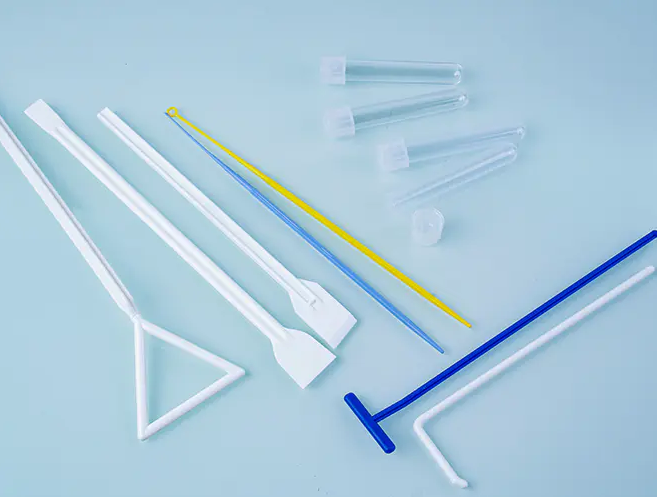
When troubleshooting a failed culture or a contaminated batch, researchers often scrutinize the incubator temperature or the media formulation. However, the silent variable frequently lies in the Microbiology Lab Consumables used to handle the sample. In modern microbiology, the shift from reusable glass to disposable, single-use plastics has introduced a new set of performance metrics that directly impact data integrity. Understanding the technical landscape of these tools is not just about logistics; it is about experimental reproducibility.
Let’s start with sterility assurance levels. A standard autoclave cycle (121°C for 15 minutes) is effective for glassware, but disposable plastics often utilize gamma irradiation or ethylene oxide (EtO) gas. For example, a petri dish intended for environmental monitoring should ideally come with a certification of sterility, often validated to a Sterility Assurance Level (SAL) of 10^-6. This means there is a one in a million chance that a single unit remains contaminated. When sourcing Microbiology Lab Consumables like pipette tips or culture tubes, look for specifications regarding "DNase-free" and "RNase-free" status, as well as "Non-Pyrogenic" (endotoxin-free) validation. A pyrogenic reaction in a cell line can invalidate weeks of work, a risk mitigated by selecting supplies certified to contain less than 0.5 EU/mL.
Another technical parameter often overlooked is the optical clarity and surface treatment (TC treatment) of plasticware. Polystyrene (PS) is the material of choice for cell culture dishes because its hydrophobic surface can be modified via corona discharge or gas plasma to become hydrophilic, allowing cells to adhere. Untreated surfaces are suitable for suspension cultures or simply washing bacteria, but for adherent mammalian cells, the distinction is vital. Manufacturers list this as "TC-treated" vs. "Non-treated." Furthermore, the thickness of the plastic—measured in mils or millimeters—affects gas exchange. A culture dish lid designed with a "venting" ring allows for controlled CO2 and O2 exchange, preventing the buildup of condensation that obscures microscopic observation.
Physical dimensions also matter for high-throughput workflows. A standard 96-well microplate used for absorbance readings in a spectrophotometer must meet ANSI/SBS (Society for Biomolecular Screening) standards to ensure robotic arms and plate readers can handle them without jamming. If the well bottom is not perfectly flat, light diffraction will skew optical density readings. Similarly, the filtration pore size in syringe filters—ranging from 0.22 µm (for sterilization) to 0.45 µm (for particle clarification)—must be matched to the specific organism or particle size. For isolating smaller bacteria like Mycoplasma, a 0.1 µm filter is sometimes required.
Finally, consider the thermal stability of the plastic. Polypropylene (PP) can withstand centrifugation forces up to 10,000 x g and temperatures down to -80°C, making it the standard for cryogenic vials. Polyethylene (PE) is softer and better suited for wash bottles. By scrutinizing these technical data sheets—ranging from RCF (Relative Centrifugal Force) ratings to chemical resistance charts—laboratories can significantly reduce experimental variables and ensure that the consumable is truly an inert vessel, not an active variable in the reaction.

 English
 French
 Spanish
 Portuguese
 Deutsch
 Turkish
 Dutch
Dutch
 Italiano
 Russian
 Romaian
 Portuguese (Brazil)
 Greek
Greek