


Analyzing Mechanical Properties: PS vs. PET for Component Packaging
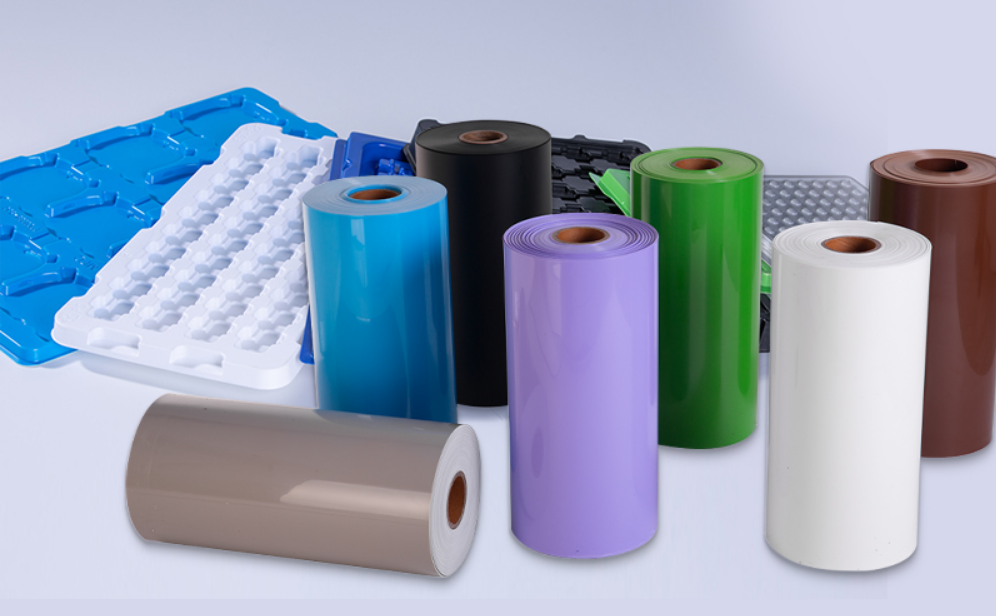
In the high-speed rhythm of surface mount technology (SMT), the integrity of the component supply chain often hinges on a component we rarely see: the carrier tape. While the pockets and the cover tape get attention, the foundation—Sheets for carrier tape—dictates the mechanical limits of the entire packaging process. Selecting the wrong substrate introduces issues like camber, inconsistent pocket formation, and excessive thermal shrinkage, leading to feeder jams and placement downtime.
When evaluating raw materials for converting, engineers look beyond simple conductivity. For standard Polystyrene (PS) based Sheets for carrier tape, the tensile yield strength is a critical parameter. Data sheets typically indicate a value around 45 to 52 MPa in the machine direction. If this is too low, the material stretches during the forming process, causing pitch errors (the distance between pockets). For instance, a 4mm pitch pocket drifting by even 0.5mm causes the placement machine’s vision system to reject the component.
Another key specification is the thermal shrinkage ratio. If you are performing a drying or baking process before reflow, the material must hold its shape. High-grade Sheets for carrier tape designed for heat resistance often maintain a shrinkage ratio of less than 0.5% to 1.5% when exposed to 130°C for 30 minutes. Polycarbonate (PC) variants, for example, offer better dimensional stability under heat compared to standard PS, with tensile modulus figures often reaching 2,200 MPa or higher -1-6.
Surface resistivity is the third pillar. For passive components (resistors, capacitors) that are not ESD sensitive, a surface resistivity of 10^11 to 10^14 Ω/sq (insulative) is acceptable. However, for active devices like transistors or LEDs, dissipative or conductive materials are required. A three-layer co-extruded sheet—where the core is loaded with conductive carbon (resulting in surface resistivity of 10^4 to 10^6 Ω/sq) and the outer layers are pure resin—provides cleanliness (no carbon flaking) and reliable static decay. Without this specific layering, you risk triboelectric charging as the component vibrates down the track. Understanding these mechanical and electrical parameters ensures that the conversion process yields a reel that runs smoothly from start to finish.

 English
 French
 Spanish
 Portuguese
 Deutsch
 Turkish
 Dutch
Dutch
 Italiano
 Russian
 Romaian
 Portuguese (Brazil)
 Greek
Greek