


Key Engineering Parameters in Industrial Motor Systems
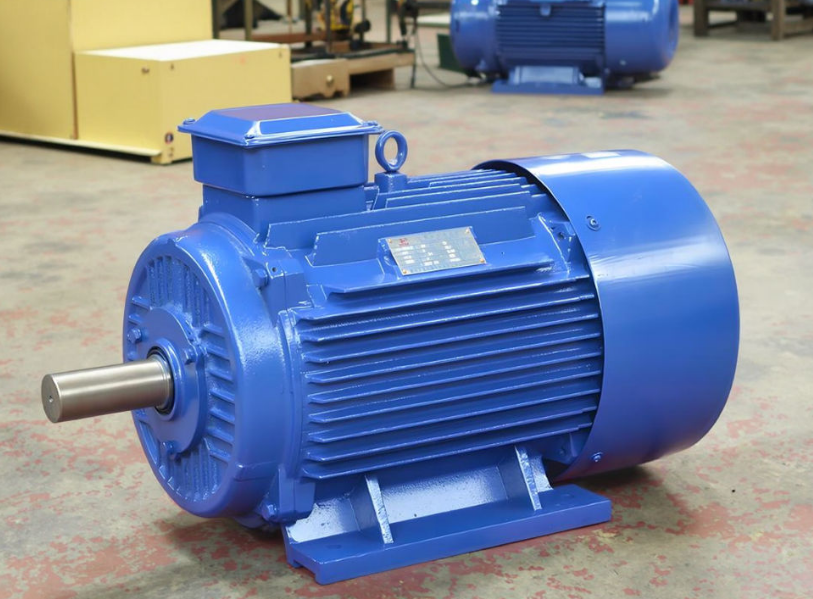
Industrial Asynchronous Motors are widely used in industrial drive systems due to their simple structure, stable torque output, and compatibility with variable load conditions. These motors operate based on electromagnetic induction, where the stator generates a rotating magnetic field that induces current in the rotor bars, producing torque without direct electrical connection.
From a technical standpoint, a standard three-phase Industrial Asynchronous Motor typically operates at rated voltages such as 230V, 400V, 690V, or medium-voltage levels like 3kV–11kV for heavy-duty systems. Frequency is usually 50Hz or 60Hz, with synchronous speeds determined by pole number, such as 3000 rpm (2-pole), 1500 rpm (4-pole), and 1000 rpm (6-pole). Due to slip (typically 1.5%–6%), actual rotor speed is slightly lower.
Efficiency classes often follow IE2 to IE4 standards, with power factors ranging from 0.75 to 0.92 depending on load conditions. The rotor is commonly a squirrel-cage type made of aluminum or copper bars, designed for high thermal stability. Insulation systems are generally rated Class F or Class H, supporting winding temperatures up to 155°C or 180°C.
Industrial applications include pumps, compressors, conveyors, crushers, and ventilation systems. These systems require stable torque behavior under variable loads, which is a key advantage of asynchronous operation. With modern VFD (Variable Frequency Drive) integration, speed control ranges from 5Hz to 100Hz depending on motor design.
Thermal protection is often integrated using PTC sensors or thermal relays, ensuring safe operation in continuous duty cycles (S1). Mechanical protection levels such as IP54 or IP55 are common in dusty or humid environments.
Overall, Industrial Asynchronous Motors remain fundamental in industrial automation due to their durability, scalable power range from 0.18kW to several megawatts, and compatibility with modern control systems.

 English
 Arabic
 French
 Portuguese
 Deutsch
 Turkish
 Dutch
Dutch
 Italiano
 Russian
 Romaian
 Portuguese (Brazil)
 Greek
Greek