


Understanding Modern Wooden Door Construction
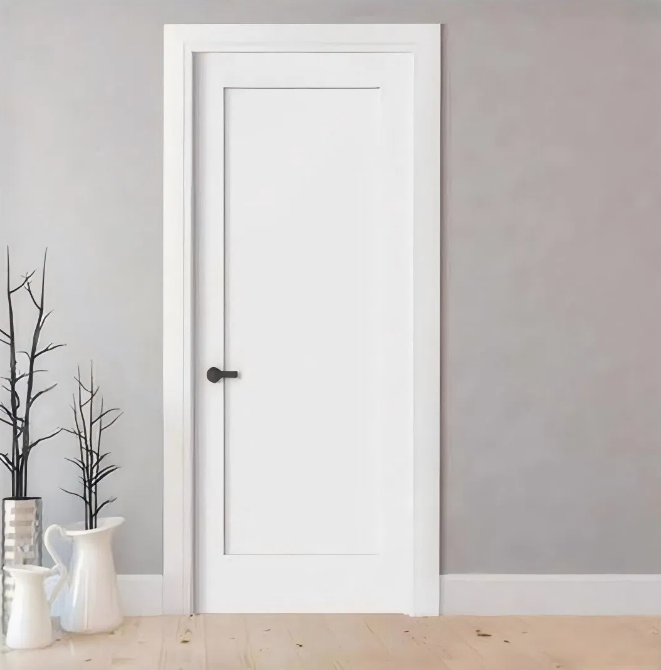
Solid Wood Interior Doors are widely used in residential and commercial buildings due to their structural stability and natural material properties. From an engineering perspective, these doors are evaluated based on core density, moisture control, and mechanical strength.
A typical Solid Wood Interior Doors structure uses kiln-dried hardwood such as oak, walnut, or pine. The moisture content is usually controlled below 8%–12% to reduce deformation risks under environmental changes.
Standard thickness ranges from 35mm to 45mm, with heavier models reaching 50mm depending on sound insulation requirements. The weight of a single door can vary between 25kg and 45kg depending on wood species and internal structure.
From a construction standpoint, many modern solid wood doors adopt a frame-and-panel system. This includes vertical stiles, horizontal rails, and infill panels that allow natural wood movement while maintaining structural integrity.
Hardwood density plays a key role in performance. For example, oak and ash typically range between 650–750 kg/m³, offering higher impact resistance compared to softwoods like pine.
Another technical advantage is acoustic performance. Solid wood doors typically provide better sound attenuation compared to hollow-core alternatives due to increased mass and reduced internal air gaps.
However, engineers also consider environmental responsiveness. Solid wood expands and contracts under humidity fluctuations, which requires precise installation gaps (usually 2–3 mm per side) and proper sealing systems.
Overall, Solid Wood Interior Doors remain a material-driven solution where density, machining accuracy, and humidity control determine long-term performance.

 English
 Arabic
 French
 Spanish
 Portuguese
 Deutsch
 Turkish
 Dutch
Dutch
 Italiano
 Russian
 Portuguese (Brazil)
 Greek
Greek