


Core Principles of Precision Three-Phase Motor Systems
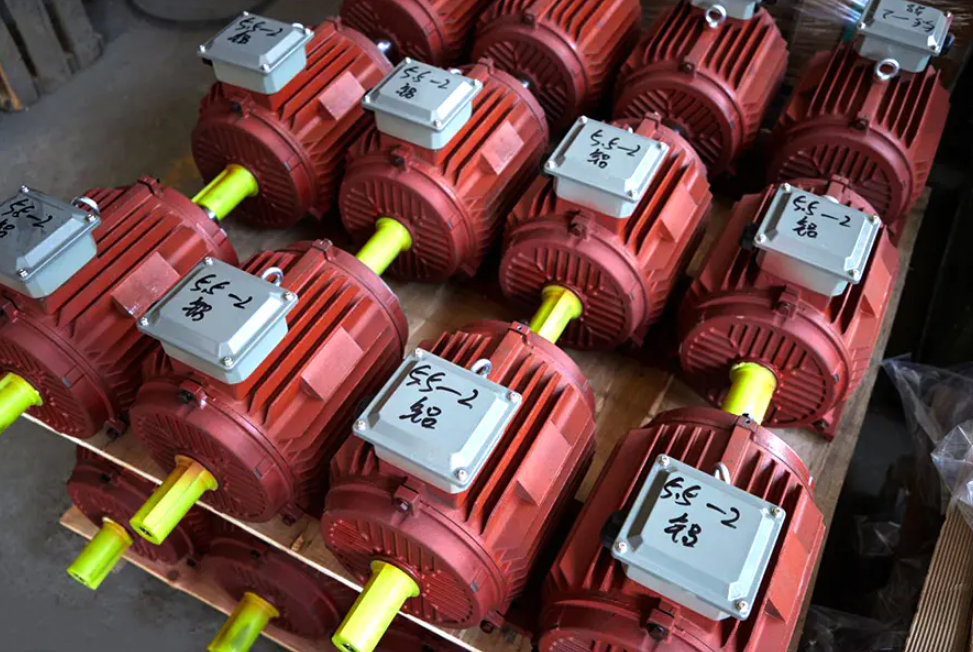
Industrial automation systems often rely on precise and stable rotational equipment, and the Synchronous Three Phase Motor plays an important role in such environments. Unlike induction-based machines, this type of motor operates at a speed strictly tied to the supply frequency, making it suitable for processes requiring consistent mechanical output.
A typical Synchronous Three Phase Motor operates at speeds determined by the formula:
Ns = 120 × f / P
where Ns is synchronous speed (rpm), f is frequency (Hz), and P is number of poles.
For example:
50 Hz system, 4-pole motor → 1500 rpm
60 Hz system, 4-pole motor → 1800 rpm
These motors commonly operate under parameters such as:
Rated voltage: 380V / 400V / 415V
Frequency: 50Hz or 60Hz
Power range: 1 kW to several MW
Power factor: often adjustable through excitation control (0.8 lagging to 0.9 leading)
Efficiency range: typically 85%–95% depending on design
A key feature of synchronous operation is that the rotor locks magnetically with the rotating stator field. The rotor may use permanent magnets or DC-excited windings. Once synchronized, the motor maintains constant speed regardless of load fluctuations within rated limits.
Industries use this motor type in compressors, pumps, and conveyor systems where stable speed is essential. In addition, the ability to operate with a controllable power factor makes it useful for electrical grid compensation tasks.
From a design perspective, the air-gap flux density, winding distribution, and rotor excitation current are critical factors. Engineers often analyze torque-angle characteristics to ensure stable operation under varying load conditions.

 English
 Arabic
 French
 Spanish
 Portuguese
 Deutsch
 Turkish
 Dutch
Dutch
 Italiano
 Romaian
 Portuguese (Brazil)
 Greek
Greek