


Electric Cooling Flow Management in Automotive Systems
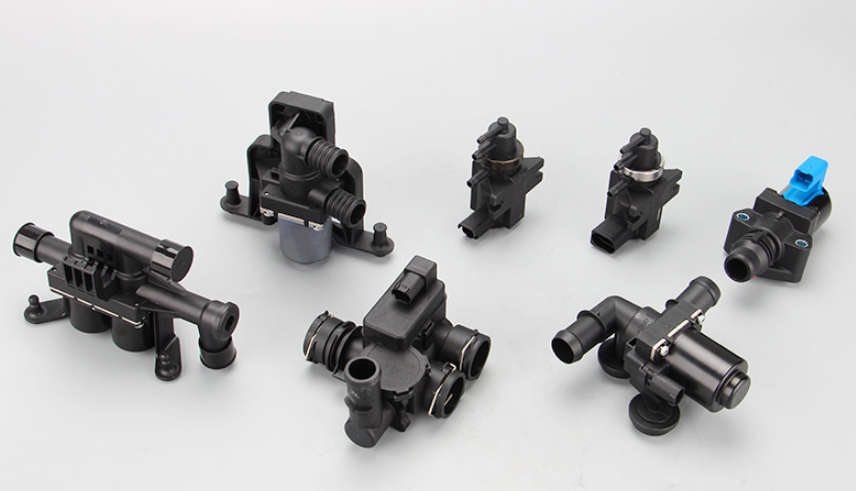
In modern thermal management systems, the Auxiliary Cooling Pump plays a key role in ensuring stable coolant circulation when the main mechanical pump alone cannot meet system demands. It is commonly used in turbocharged engines, hybrid platforms, and high-load industrial cooling loops.
An Auxiliary Cooling Pump is typically an electrically driven centrifugal pump. Standard voltage configurations include 12V DC for passenger vehicles and 24V DC for heavy-duty systems. Flow capacity generally ranges from 10 L/min to 80 L/min, depending on system design. Operating pressure is usually between 0.1 MPa and 0.3 MPa.
The pump activates based on ECU or thermal sensor signals. For example, when coolant temperature exceeds approximately 95°C, the system may trigger auxiliary circulation. In turbocharged applications, it continues working for 3–15 minutes after engine shutdown to prevent heat soak damage.
Structurally, the pump includes:
Brushless DC motor or brushed motor unit
Thermoplastic or aluminum housing
Impeller designed for low cavitation flow
Integrated temperature or PWM control interface
In advanced vehicle platforms, the Auxiliary Cooling Pump may also support battery thermal regulation, especially in hybrid systems where battery temperature must remain within 20°C–45°C operating range.

 English
 Arabic
 French
 Spanish
 Portuguese
 Deutsch
 Dutch
Dutch
 Italiano
 Russian
 Romaian
 Portuguese (Brazil)
 Greek
Greek