



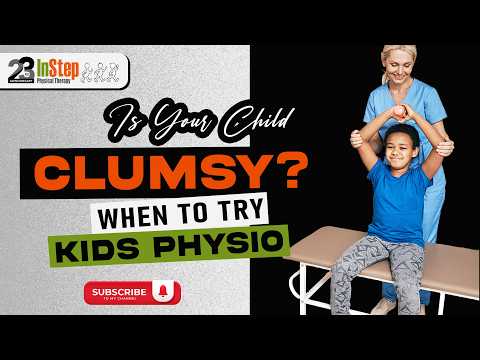
Is your child often tripping, bumping into things, or avoiding physical activities? While some clumsiness is normal during growth, it can sometimes be an early sign that a child may benefit from physiotherapy support for coordination and motor skills.
In this video, Roo Preet, Physiotherapy Intern at In Step Physical Therapy in Edmonton, explains how parents can recognize early signs of coordination delays and how pediatric physiotherapy helps improve balance, strength, and confidence in children.
Children grow quickly, and their brain-body coordination takes time to develop. However, if certain movement challenges persist, early physiotherapy intervention can support better motor control and movement development.
In this video, you’ll learn about:
• The difference between normal clumsiness and coordination delay
• Signs of weak core strength or balance issues in kids
• How motor skill difficulties affect daily activities
• Unusual walking or running patterns in children
• When parents should consider physiotherapy assessment for their child
Pediatric physiotherapy sessions are designed to be fun, interactive, and movement-based, using games and playful exercises to help children build coordination, balance, and confidence.
Early guidance can support children in moving comfortably, participating in play, and developing stronger movement patterns as they grow.
In this video, Roo Preet, Physiotherapy Intern at In Step Physical Therapy in Edmonton, explains how parents can recognize early signs of coordination delays and how pediatric physiotherapy helps improve balance, strength, and confidence in children.
Children grow quickly, and their brain-body coordination takes time to develop. However, if certain movement challenges persist, early physiotherapy intervention can support better motor control and movement development.
In this video, you’ll learn about:
• The difference between normal clumsiness and coordination delay
• Signs of weak core strength or balance issues in kids
• How motor skill difficulties affect daily activities
• Unusual walking or running patterns in children
• When parents should consider physiotherapy assessment for their child
Pediatric physiotherapy sessions are designed to be fun, interactive, and movement-based, using games and playful exercises to help children build coordination, balance, and confidence.
Early guidance can support children in moving comfortably, participating in play, and developing stronger movement patterns as they grow.
Is your child often tripping, bumping into things, or avoiding physical activities? While some clumsiness is normal during growth, it can sometimes be an early sign that a child may benefit from physiotherapy support for coordination and motor skills.
In this video, Roo Preet, Physiotherapy Intern at In Step Physical Therapy in Edmonton, explains how parents can recognize early signs of coordination delays and how pediatric physiotherapy helps improve balance, strength, and confidence in children.
Children grow quickly, and their brain-body coordination takes time to develop. However, if certain movement challenges persist, early physiotherapy intervention can support better motor control and movement development.
In this video, you’ll learn about:
• The difference between normal clumsiness and coordination delay
• Signs of weak core strength or balance issues in kids
• How motor skill difficulties affect daily activities
• Unusual walking or running patterns in children
• When parents should consider physiotherapy assessment for their child
Pediatric physiotherapy sessions are designed to be fun, interactive, and movement-based, using games and playful exercises to help children build coordination, balance, and confidence.
Early guidance can support children in moving comfortably, participating in play, and developing stronger movement patterns as they grow.
0 Reacties
0 aandelen
35 Views
0 voorbeeld









 English
 Arabic
 French
 Spanish
 Portuguese
 Deutsch
 Turkish
 Italiano
 Russian
 Romaian
 Portuguese (Brazil)
 Greek
Greek