



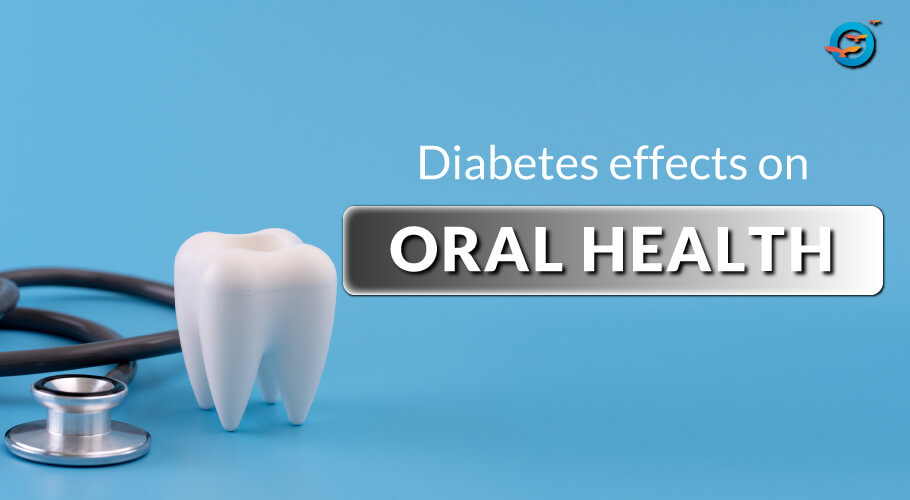
Diabetes affect on your Oral Health
Diabetes affects oral health with Solutions
Diabetes, it might surprise you to know, is actually a symptom of a much more insidious disorder—insulin resistance. It refers to the body’s inability to use the insulin produced by the pancreas, either because it is deficient or insufficient. When insulin in the body is unable to open up cells and allow the intake of glucose, this glucose builds up in the bloodstream, leading to high blood sugar levels (BSL).
Common oral health problems associated with diabetes
Some of the problems that diabetics are at risk from include: Dry mouth Sustained high blood sugar decreases the production of saliva, which results in a dry mouth. This is a prime condition for soreness, ulcers, and tooth decay.
Gingivitis and periodontitis (gum inflammation):
One of the effects of high blood sugar is a gradual thickening of the walls of blood vessels—which, if unchecked will lead to high BP. This slows movement of nutrients into the cells and the secretion of waste products from the various tissues of the body.
Damaged healing capacity
As blood flow through the body decreases, the body’s ability to heal quickly is impacted. When this happens dental procedures, especially those that involve surgeries, begin to heal slowly.
Oral Thrush
Because the body’s ability to attack infection is undermined, diabetics who may need to frequently take antibiotics to address infection, become prone to fungal infections of the mouth and tongue.
Burning in the mouth or tongue
Thrush is responsible for this symptom. Smoking can also raise the risk of thrush; in fact, smokers are 20x more likely to contract thrush or periodontal disease, than nonsmokers.
Risk of dental cavities
The high levels of glucose in the saliva of diabetics help bacteria grow, leading to tooth decay gum disease, and cavities.
Preventions:
If you suffer from diabetes, it is imperative to follow proper oral hygiene practices. If you notice any problem or change in your oral region, visit your dentist immediately. Some things you can do to reduce the chances of oral health problems include:
Maintain recommended blood sugar levels
Be aware of the chances of hypoglycemia: (low blood sugar)
Follow proper oral hygiene
Stop smoking
Browse full blog-
https://www.freedomfromdiabetes.org/blog/post/Diabetes%20affect%20on%20your%20Oral%20Health/2617
Contact us :-
Mob : +91-7776077760
Email-Id : info@freedomfromdiabetes.org
Also connect with us on our website , Facebook page, and youtube
Diabetes affects oral health with Solutions
Diabetes, it might surprise you to know, is actually a symptom of a much more insidious disorder—insulin resistance. It refers to the body’s inability to use the insulin produced by the pancreas, either because it is deficient or insufficient. When insulin in the body is unable to open up cells and allow the intake of glucose, this glucose builds up in the bloodstream, leading to high blood sugar levels (BSL).
Common oral health problems associated with diabetes
Some of the problems that diabetics are at risk from include: Dry mouth Sustained high blood sugar decreases the production of saliva, which results in a dry mouth. This is a prime condition for soreness, ulcers, and tooth decay.
Gingivitis and periodontitis (gum inflammation):
One of the effects of high blood sugar is a gradual thickening of the walls of blood vessels—which, if unchecked will lead to high BP. This slows movement of nutrients into the cells and the secretion of waste products from the various tissues of the body.
Damaged healing capacity
As blood flow through the body decreases, the body’s ability to heal quickly is impacted. When this happens dental procedures, especially those that involve surgeries, begin to heal slowly.
Oral Thrush
Because the body’s ability to attack infection is undermined, diabetics who may need to frequently take antibiotics to address infection, become prone to fungal infections of the mouth and tongue.
Burning in the mouth or tongue
Thrush is responsible for this symptom. Smoking can also raise the risk of thrush; in fact, smokers are 20x more likely to contract thrush or periodontal disease, than nonsmokers.
Risk of dental cavities
The high levels of glucose in the saliva of diabetics help bacteria grow, leading to tooth decay gum disease, and cavities.
Preventions:
If you suffer from diabetes, it is imperative to follow proper oral hygiene practices. If you notice any problem or change in your oral region, visit your dentist immediately. Some things you can do to reduce the chances of oral health problems include:
Maintain recommended blood sugar levels
Be aware of the chances of hypoglycemia: (low blood sugar)
Follow proper oral hygiene
Stop smoking
Browse full blog-
https://www.freedomfromdiabetes.org/blog/post/Diabetes%20affect%20on%20your%20Oral%20Health/2617
Contact us :-
Mob : +91-7776077760
Email-Id : info@freedomfromdiabetes.org
Also connect with us on our website , Facebook page, and youtube
Diabetes affect on your Oral Health
Diabetes affects oral health with Solutions
Diabetes, it might surprise you to know, is actually a symptom of a much more insidious disorder—insulin resistance. It refers to the body’s inability to use the insulin produced by the pancreas, either because it is deficient or insufficient. When insulin in the body is unable to open up cells and allow the intake of glucose, this glucose builds up in the bloodstream, leading to high blood sugar levels (BSL).
Common oral health problems associated with diabetes
Some of the problems that diabetics are at risk from include: Dry mouth Sustained high blood sugar decreases the production of saliva, which results in a dry mouth. This is a prime condition for soreness, ulcers, and tooth decay.
Gingivitis and periodontitis (gum inflammation):
One of the effects of high blood sugar is a gradual thickening of the walls of blood vessels—which, if unchecked will lead to high BP. This slows movement of nutrients into the cells and the secretion of waste products from the various tissues of the body.
Damaged healing capacity
As blood flow through the body decreases, the body’s ability to heal quickly is impacted. When this happens dental procedures, especially those that involve surgeries, begin to heal slowly.
Oral Thrush
Because the body’s ability to attack infection is undermined, diabetics who may need to frequently take antibiotics to address infection, become prone to fungal infections of the mouth and tongue.
Burning in the mouth or tongue
Thrush is responsible for this symptom. Smoking can also raise the risk of thrush; in fact, smokers are 20x more likely to contract thrush or periodontal disease, than nonsmokers.
Risk of dental cavities
The high levels of glucose in the saliva of diabetics help bacteria grow, leading to tooth decay gum disease, and cavities.
Preventions:
If you suffer from diabetes, it is imperative to follow proper oral hygiene practices. If you notice any problem or change in your oral region, visit your dentist immediately. Some things you can do to reduce the chances of oral health problems include:
Maintain recommended blood sugar levels
Be aware of the chances of hypoglycemia: (low blood sugar)
Follow proper oral hygiene
Stop smoking
Browse full blog-
https://www.freedomfromdiabetes.org/blog/post/Diabetes%20affect%20on%20your%20Oral%20Health/2617
Contact us :-
Mob : +91-7776077760
Email-Id : info@freedomfromdiabetes.org
Also connect with us on our website , Facebook page, and youtube
0 Comments
0 Shares
207 Views
0 Reviews


 Arabic
 French
 Spanish
 Portuguese
 Deutsch
 Turkish
 Dutch
Dutch
 Italiano
 Russian
 Romaian
 Portuguese (Brazil)
 Greek
Greek