


Frequency Converter: The Complete Guide to Converting Frequency Units
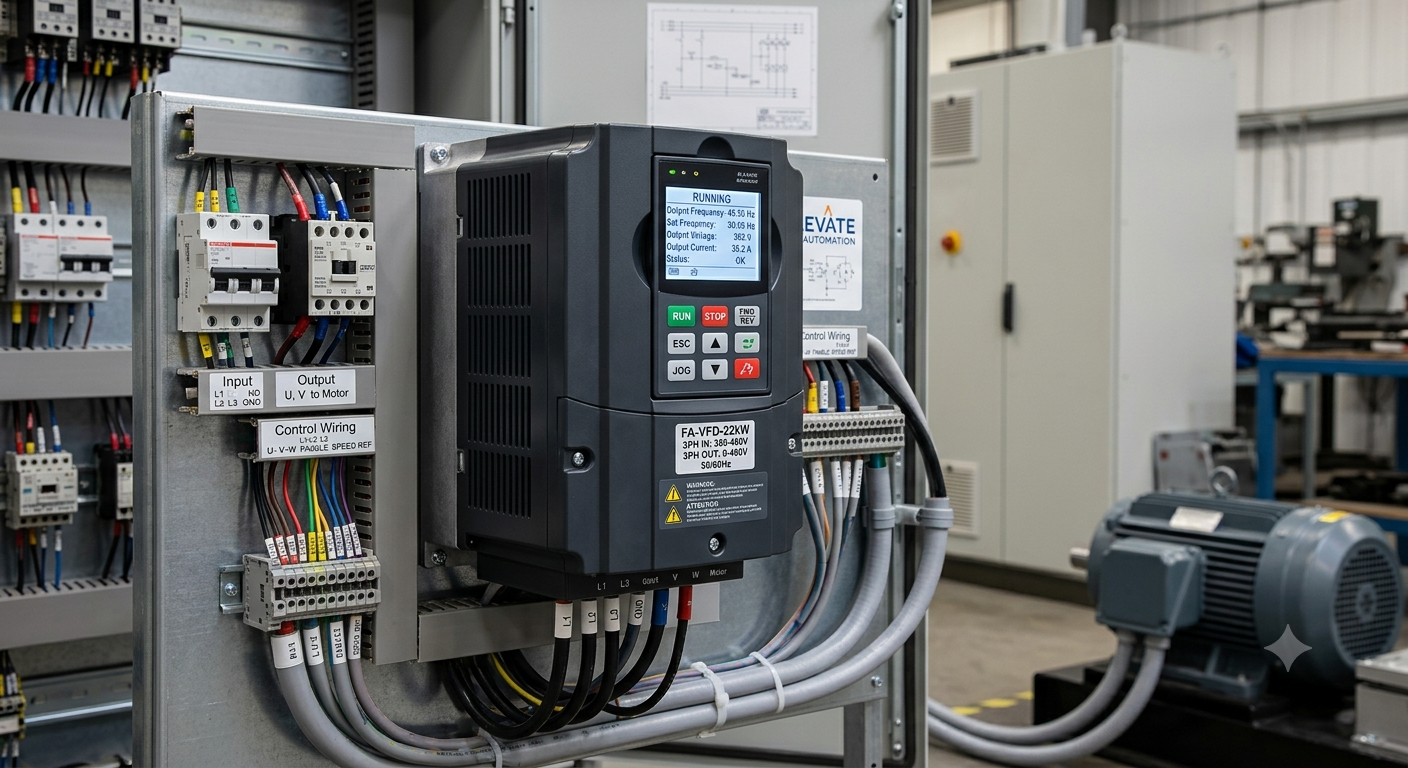
Frequency shows up everywhere in technology, from the processor speed of a computer to the radio station numbers on a car stereo, yet the units used to describe it can shift by orders of magnitude depending on the context. A frequency converter takes the confusion out of switching between hertz, kilohertz, megahertz, and gigahertz instantly, without requiring you to count zeros or remember metric prefixes. Tools like Multi Converters make this conversion effortless, whether you're comparing wireless signal specs or working through an electronics problem. This guide explains what frequency actually measures, the common units used to express it, and how to convert between them effectively.
What Is a Frequency Converter and Why Does It Matter?
A frequency converter takes a value expressed in one frequency unit and converts it into the equivalent value in a different unit. Frequency measures how many times something repeats per second, whether that's a sound wave, an electrical signal, or a radio transmission, with hertz serving as the base unit for one cycle per second.
This matters because frequency values in modern technology often span an enormous range, from the 60 hertz of standard household electricity to the multiple gigahertz speeds of a computer processor. Working comfortably across this range requires moving fluently between units, since writing out a processor speed in raw hertz would mean dealing with billions of digits unnecessarily. A frequency converter removes the friction from this process, instantly translating between whichever units a specific comparison requires.
Common Frequency Units and Where They're Used
Each frequency unit represents a specific multiple of hertz, following the standard metric prefix system that scales by factors of one thousand.
| Unit | Full Name | Equivalent in Hertz | Common Use Case |
|---|---|---|---|
| Hz | Hertz | 1 | Household electricity, audio frequencies |
| kHz | Kilohertz | 1,000 | AM radio broadcasting, audio equipment |
| MHz | Megahertz | 1,000,000 | FM radio, older computer processors, Wi-Fi channels |
| GHz | Gigahertz | 1,000,000,000 | Modern computer processors, 5G networks |
| THz | Terahertz | 1,000,000,000,000 | Advanced research, certain imaging technologies |
This consistent thousand fold scaling between each unit is exactly what makes frequency conversion so mechanically simple once you understand the pattern, even though the practical range of values across different technologies can feel dramatically different at first glance.
How Frequency Unit Conversion Works
Since each step between units represents a factor of one thousand, converting between frequency units is primarily a matter of moving a decimal point the correct number of places.
| From | To | Conversion Factor |
|---|---|---|
| 1 kHz | Hz | 1,000 Hz |
| 1 MHz | kHz | 1,000 kHz |
| 1 MHz | Hz | 1,000,000 Hz |
| 1 GHz | MHz | 1,000 MHz |
| 1 GHz | Hz | 1,000,000,000 Hz |
This simplicity is one of the main reasons frequency conversion mistakes usually come from miscounting zeros rather than from any complex underlying math, which is exactly the kind of error a frequency converter eliminates entirely.
Manual Conversion vs Using a Frequency Converter Tool
Converting frequency values by hand is possible since the math only involves powers of ten, but miscounting zeros or misplacing a decimal point happens more often than people expect, especially with larger values.
| Method | Accuracy | Speed | Best For |
|---|---|---|---|
| Manual calculation | Moderate, easy to miscount zeros | Slow for large values | Simple, small scale conversions |
| Scientific calculator | High | Fast | Quick checks when a calculator is on hand |
| Online frequency converter tool | Very high | Instant | Any value across any unit without manual counting |
| Programming language functions | High | Fast within code | Automating conversions inside an application |
For anything beyond the simplest conversions, an online frequency converter tool offers the most reliable option, removing the risk of a misplaced decimal point that could otherwise lead to a value being off by a factor of a thousand or more.
Why People Use a Frequency Converter
For Computer Hardware Specifications
Processor speeds, memory bus speeds, and other computer components are typically rated in gigahertz or megahertz, and comparing specifications across different generations of hardware or different manufacturers sometimes requires converting between these units for a clearer comparison.
For Radio and Wireless Communication
Radio stations, Wi-Fi channels, and wireless devices all operate within specific frequency ranges, often expressed in kilohertz, megahertz, or gigahertz depending on the technology. Converting between these units helps when comparing devices or troubleshooting interference issues between equipment operating on nearby frequencies.
For Audio Engineering
Audio frequencies, including the range of human hearing, are typically measured in hertz and kilohertz. Sound engineers and musicians sometimes need to convert between these units when working with equipment specifications or audio equalization settings.
For Electrical Engineering
Standard electrical power frequency, either 50 or 60 hertz depending on the country, forms the basis for many electrical engineering calculations. Converting frequency values helps when working with equipment designed for one electrical standard but used in a region with a different one.
For Telecommunications and Networking
Modern mobile networks, including 4G and 5G technology, operate across specific frequency bands measured in megahertz and gigahertz. Understanding and converting between these units helps when comparing network specifications or troubleshooting connectivity issues.
Frequency vs Wavelength: A Related Concept
Frequency and wavelength describe two closely related properties of a wave, and understanding the relationship between them often comes up alongside frequency conversion in physics and engineering contexts.
| Aspect | Frequency | Wavelength |
|---|---|---|
| What it measures | Number of cycles per second | Physical distance of one complete wave cycle |
| Common units | Hertz, kilohertz, megahertz, gigahertz | Meters, centimeters, nanometers |
| Relationship | Higher frequency means shorter wavelength | Lower frequency means longer wavelength |
| Example | 2.4 GHz Wi-Fi signal | Corresponds to a wavelength of about 12.5 centimeters |
This inverse relationship explains why higher frequency signals, like 5G millimeter wave technology, have a shorter range and struggle to pass through obstacles compared to lower frequency signals with longer wavelengths that travel further and penetrate materials more easily.
Frequency Conversion in Programming and Engineering Tools
Developers and engineers building applications involving frequency calculations often rely on simple unit conversion logic or dedicated libraries rather than hardcoding scaling factors throughout their code.
| Language or Tool | Common Approach | Typical Use Case |
|---|---|---|
| Python | Direct multiplication or pint library | Signal processing, scientific computing |
| JavaScript | convert-units package | Web based calculators and dashboards |
| Excel or Google Sheets | CONVERT() function | Quick spreadsheet based frequency calculations |
| MATLAB | Built in unit handling | Signal processing and electronics simulations |
Since frequency conversion only involves powers of ten, many of these tools handle it through simple multiplication or division, though using a dedicated function still helps avoid manual errors when working with very large or very small frequency values.
Frequency and Sample Rates in Digital Audio
Digital audio adds another layer to frequency conversion through the concept of sample rate, which describes how many times per second an analog sound wave is measured and converted into digital data, typically expressed in hertz or kilohertz, such as the common 44.1 kHz used for CD quality audio. While sample rate and audio frequency are related concepts, they aren't the same thing, since the sample rate needs to be at least twice the highest frequency being recorded in order to accurately capture it, a principle known as the Nyquist theorem. Converting between sample rate specifications and the actual audible frequency range becomes important when comparing audio equipment or troubleshooting why certain high frequency sounds might not be captured accurately by a given recording setup.
Frequency Converters in Scientific and Research Contexts
Beyond everyday consumer technology, frequency conversion plays an important role in scientific research, particularly in fields like spectroscopy and telecommunications research where frequencies can range from a few hertz up into the terahertz range and beyond. Researchers working with electromagnetic spectrum data often need to convert between frequency and other related measurements, including wavelength and photon energy, depending on which property is most relevant to a specific experiment or calculation. A frequency converter that handles this wide range accurately, without losing precision at extreme values, becomes essential for maintaining consistency across research data that might span many different orders of magnitude within a single dataset.
Tips for Using a Frequency Converter Effectively
- Double check the metric prefix before converting, since confusing megahertz with gigahertz results in an error of a thousand times.
- Be precise with large processor or network specifications, since marketing materials sometimes round frequency values in ways that matter for technical comparisons.
- Remember the inverse relationship with wavelength, especially when working with radio or wireless signal calculations.
- Use consistent units throughout a single comparison, converting all values to the same unit before drawing conclusions about relative performance or range.
- Cross check conversions for regional electrical standards, since the difference between 50 and 60 hertz can matter for equipment compatibility.
Conclusion
A frequency converter makes it simple to move between hertz, kilohertz, megahertz, and gigahertz, units that show up constantly across computing, wireless communication, and audio engineering. Understanding how these units scale by powers of ten, paired with a dependable frequency converter, takes the guesswork out of comparing frequency values no matter which technology you're working with.

 English
 Arabic
 French
 Spanish
 Deutsch
 Turkish
 Dutch
Dutch
 Italiano
 Russian
 Romaian
 Portuguese (Brazil)
 Greek
Greek