


Logistics Predictive Intelligence Platforms Transform Supply Chains
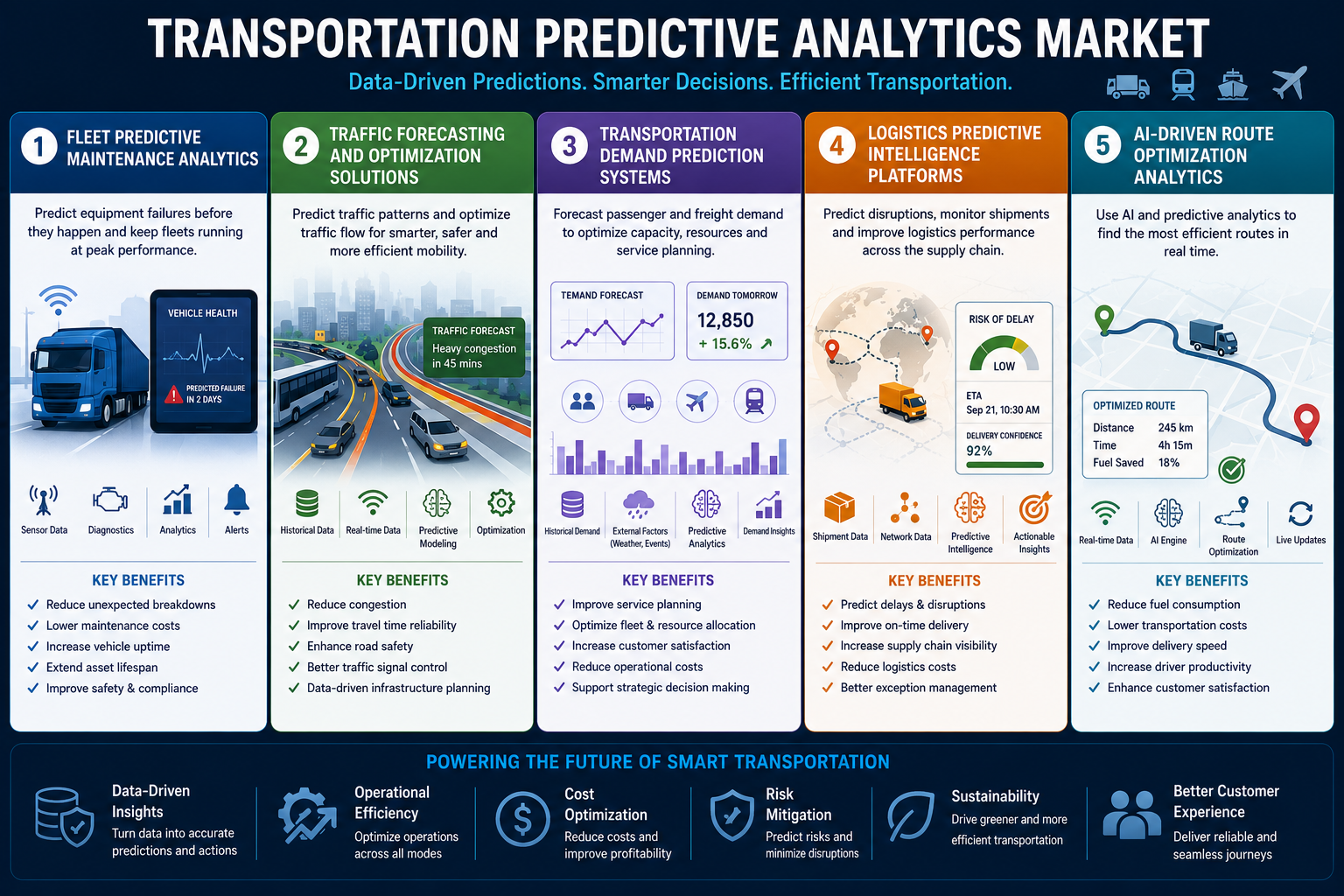
Modern supply chains face unprecedented uncertainty. According to a market analysis from Market Research Future (MRFR), Logistics Predictive Intelligence Platforms are emerging as essential tools for navigating this complexity. These platforms use advanced analytics to predict disruptions, optimize resource allocation, and improve supply chain resilience.
The Challenge of Modern Logistics
Logistics operations are increasingly complex and volatile. Global supply chains span multiple countries and time zones. Customer expectations for speed and reliability continue to rise. Disruptions—from port congestion to weather events to geopolitical tensions—are more frequent. Logistics predictive intelligence platforms address these challenges by providing forward-looking visibility.
The Transportation Predictive Analytics Market, valued at $6.96 billion in 2024, is projected to reach $46.1 billion by 2035, reflecting the growing demand for intelligent logistics solutions. The market is being driven by the need to improve operational efficiency, reduce costs, and enhance customer satisfaction.
What Logistics Predictive Intelligence Platforms Deliver
Logistics predictive intelligence platforms provide a comprehensive view of supply chain operations. They integrate data from multiple sources: vehicle telematics, warehouse management systems, weather services, traffic data, and geopolitical risk assessments. They apply predictive models to forecast potential disruptions, estimated arrival times, and resource requirements.
A global retailer might use a predictive intelligence platform to manage its supply chain during the holiday season. The platform forecasts that a major port on the West Coast will experience congestion due to labor negotiations. It recommends rerouting some shipments to East Coast ports and adjusting inventory allocations accordingly. The retailer avoids stockouts during the peak shopping period.
Transportation Demand Prediction Systems for Strategic Planning
While predictive intelligence platforms focus on operational visibility, transportation demand prediction systems support strategic planning. These systems forecast long-term demand patterns, helping logistics providers make decisions about capacity, network design, and capital investment.
A logistics provider might use demand prediction to plan for network expansion. The system forecasts that e-commerce demand in a specific region will grow by 15 percent annually for the next five years. The provider builds a new distribution center in that region, positioning itself to capture the growing market.
The MRFR report notes that the maritime transport type is one of the fastest-growing segments in the market. Shipping companies are increasingly adopting predictive analytics to optimize vessel routing, manage port congestion, and improve fuel efficiency.
Enhanced Data Analytics Capabilities
The evolution of logistics predictive intelligence is driven by advancements in data analytics technologies. Organizations are utilizing sophisticated algorithms and machine learning techniques to analyze vast amounts of data. This development is improving forecasting accuracy and enabling more sophisticated optimization.
A shipping line might use machine learning to predict vessel arrival times. The model considers scheduled arrival times, current position, speed, weather conditions, and port congestion. The resulting predictions are more accurate than traditional estimates, enabling better planning for port operations and cargo handling.
Integration of IoT Technologies
The incorporation of IoT devices into logistics operations is enhancing data collection and analysis. Sensors on containers, vehicles, and warehouse equipment provide real-time data on location, condition, and performance. This integration allows for real-time monitoring and more accurate predictions.
A logistics company might use IoT sensors on refrigerated containers to monitor temperature throughout the journey. The predictive intelligence platform uses this data to predict whether any containers are at risk of temperature deviation. The company intervenes before the cargo is compromised, reducing waste and improving customer satisfaction.
Focus on Safety and Risk Management
Logistics predictive intelligence platforms are increasingly focused on safety and risk management. With rising concerns over accidents and operational risks, predictive analytics provides valuable insights that can help organizations mitigate potential hazards. By analyzing historical data and real-time information, companies can identify risk factors and implement proactive measures to enhance safety.
The market for predictive analytics in safety management is projected to grow as organizations prioritize the well-being of their employees and customers. This focus on safety not only helps in compliance with regulations but also enhances the reputation of logistics companies.
Industry Developments
Recent industry developments demonstrate the momentum in logistics predictive intelligence. Optibus raised $100 million to expand its cloud-native transportation planning software. Alstom acquired RailVision for predictive analytics in rail safety and maintenance. Volvo Trucks secured a contract with DHL for predictive fleet analytics. These investments reflect the growing strategic importance of predictive intelligence in logistics.
Regional Growth
The Asia-Pacific region is experiencing the fastest growth in logistics predictive intelligence, driven by rapid urbanization, rising e-commerce demand, and government investments in transportation infrastructure. North America remains the largest market, supported by a strong technology ecosystem and early adoption of advanced analytics.
Future Outlook
As the market evolves, logistics predictive intelligence platforms will become more integrated with other enterprise systems. The development of AI-driven route optimization, predictive maintenance solutions, and real-time traffic analytics will further enhance their capabilities.
Conclusion
Logistics predictive intelligence platforms are essential for navigating the complexity of modern supply chains. They provide forward-looking visibility that enables proactive decision-making. Transportation Demand Prediction Systems support strategic planning and resource allocation. Together, they enable logistics providers to anticipate disruptions, optimize operations, and deliver superior customer service.


 English
 Arabic
 French
 Spanish
 Portuguese
 Deutsch
 Dutch
Dutch
 Italiano
 Russian
 Romaian
 Portuguese (Brazil)
 Greek
Greek