


What Factors Affect Metal Cutting Stability And Output Quality?
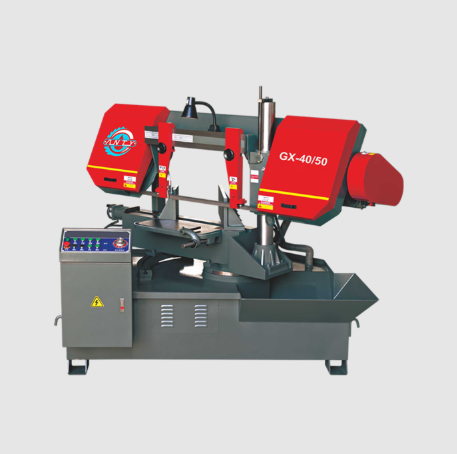
A vertical metal band sawing machine and band sawing machine are often discussed in fabrication workshops where metal cutting accuracy, production speed, and material utilization directly influence operating costs. Many workshops face recurring issues such as uneven cutting surfaces, blade wear inconsistency, and material deformation during processing. These problems become more noticeable when working with alloy steels, stainless materials, or irregular-shaped workpieces that require stable and controlled cutting paths.
Metal cutting processes are no longer limited to manual handling. Industrial production now relies on controlled mechanical systems that help maintain dimensional accuracy while reducing operator fatigue. A vertical metal band sawing machine plays a role in applications where flexibility in cutting angle and vertical feed control is required, especially in small batch or customized production environments.
Blade stability is one of the core challenges in metal cutting operations. When vibration occurs during cutting, surface quality may decline and blade life can shorten significantly. A band sawing machine reduces these risks by maintaining continuous blade movement with controlled tension, allowing smoother interaction between blade teeth and material surface.
Different materials require different cutting speeds. Mild steel may tolerate higher feed rates, while stainless steel or hardened alloys often require slower and more controlled cutting conditions. Operators typically adjust blade speed between 20 m/min and 100 m/min depending on material hardness and thickness. Incorrect speed selection may result in excessive heat buildup, which affects both cutting precision and tool longevity.
Cooling systems are another important factor in maintaining cutting stability. Cutting fluid helps reduce friction between the blade and material, which in turn lowers temperature during operation. A stable cooling flow can reduce blade wear by approximately 15% to 30% depending on production conditions. This also helps maintain smoother surface finishes after cutting.
Vertical cutting structures provide additional flexibility in handling irregular workpieces. Unlike horizontal systems that rely on fixed positioning, a vertical metal band sawing machine allows operators to guide materials manually along the blade path. This is particularly useful in mold processing, repair workshops, and prototype development environments where material shapes may vary frequently.
Blade tension adjustment directly influences cutting accuracy. If tension is too low, blade drift may occur, leading to dimensional deviation. If tension is too high, blade fatigue may increase and reduce operational lifespan. Most industrial band sawing machine systems include mechanical or hydraulic tension control systems to maintain consistent blade stability during operation.
Energy consumption is also a factor in workshop planning. Compared with abrasive cutting systems, band saw cutting generally consumes less power per unit of material removed. In medium-scale fabrication shops, energy savings can range between 10% and 25% depending on usage frequency and machine configuration.
Material waste reduction is another operational concern. Cutting precision affects how closely final parts match design specifications. A deviation of even 0.5 mm may lead to rejection in precision assembly environments. Stable sawing systems help reduce scrap rates by maintaining consistent kerf width and controlled feed rates.
Maintenance routines also influence machine performance. Blade inspection, guide alignment, and lubrication checks are typically performed daily or weekly depending on production volume. Neglecting maintenance may result in uneven cutting patterns or increased vibration during operation.
Automation trends are gradually influencing band sawing machine systems. Some modern configurations include programmable feed controls and digital speed monitoring. These systems allow operators to store cutting parameters for different materials, reducing setup time between production batches.
Work safety remains an important consideration in metal cutting environments. Protective guards, emergency stop systems, and stable clamping mechanisms help reduce operational risk. Vertical cutting setups also require careful material handling to avoid operator exposure to moving blade sections.
Industrial demand for customized metal components continues to grow across automotive repair, construction fabrication, and machinery manufacturing sectors. Small workshops often rely on flexible cutting systems rather than fully automated production lines. A vertical metal band sawing machine provides adaptability for varied cutting tasks without requiring extensive reconfiguration.
Blade material selection also affects performance outcomes. High-speed steel and bi-metal blades are commonly used depending on material hardness and cutting requirements. Bi-metal blades offer improved durability when processing alloy steels, while high-speed steel blades are often used for general-purpose cutting tasks.
Workshop layout planning can influence machine efficiency. Proper spacing between material storage, cutting stations, and finishing areas reduces handling time. This improves workflow efficiency even without increasing machine speed.
A band sawing machine remains a foundational tool in metalworking industries due to its balance between precision, cost efficiency, and operational flexibility. Whether used for structural steel processing or custom fabrication, its role continues to expand as manufacturers seek controlled and repeatable cutting performance across diverse production environments.

 English
 Arabic
 French
 Spanish
 Portuguese
 Deutsch
 Turkish
 Dutch
Dutch
 Italiano
 Russian
 Romaian
 Portuguese (Brazil)