


What You Should Know About the History of Semiconductors and Their Industrial Impact
The modern world depends heavily on semiconductor technology, even though most people rarely see it directly. Smartphones, industrial automation systems, electric vehicles, medical equipment, communication networks, and artificial intelligence platforms all rely on semiconductor devices to function properly. Without semiconductors, modern digital infrastructure would not exist.
The history of semiconductors represents one of the most important technological developments in human civilization. Over several decades, semiconductor innovation transformed electronics from large and inefficient electrical systems into compact, intelligent, and highly powerful technologies capable of processing enormous amounts of information in real time.
Semiconductors not only changed consumer electronics but also reshaped manufacturing, transportation, healthcare, communication, and industrial production worldwide. Their development created entirely new industries and dramatically improved global productivity.
Understanding the history of semiconductors helps engineers, procurement specialists, and technology companies better understand how modern electronics evolved and why semiconductor technology continues to play a critical role in industrial growth.
The Early Foundations of Electrical Technology
Before semiconductors existed, electrical systems relied mainly on mechanical switches and vacuum tube technology. Early electrical devices were large, inefficient, and difficult to maintain.
During the late 1800s and early 1900s, scientists and engineers began studying how different materials conducted electricity. Some materials allowed electricity to pass through easily, while others partially restricted electrical flow. This led to the discovery of semiconductor behavior.
A semiconductor is a material with electrical conductivity that falls between a conductor and an insulator. Unlike traditional conductive metals, semiconductor materials can control electrical signals under specific conditions.
This discovery eventually became the foundation for modern electronics.
Early electrical systems at the time included:
- Telegraph equipment
- Radio transmitters
- Industrial control systems
- Early communication devices
- Experimental computing systems
Although these technologies were groundbreaking, they lacked the efficiency and scalability needed for future innovation.
The Vacuum Tube Era Before Semiconductors
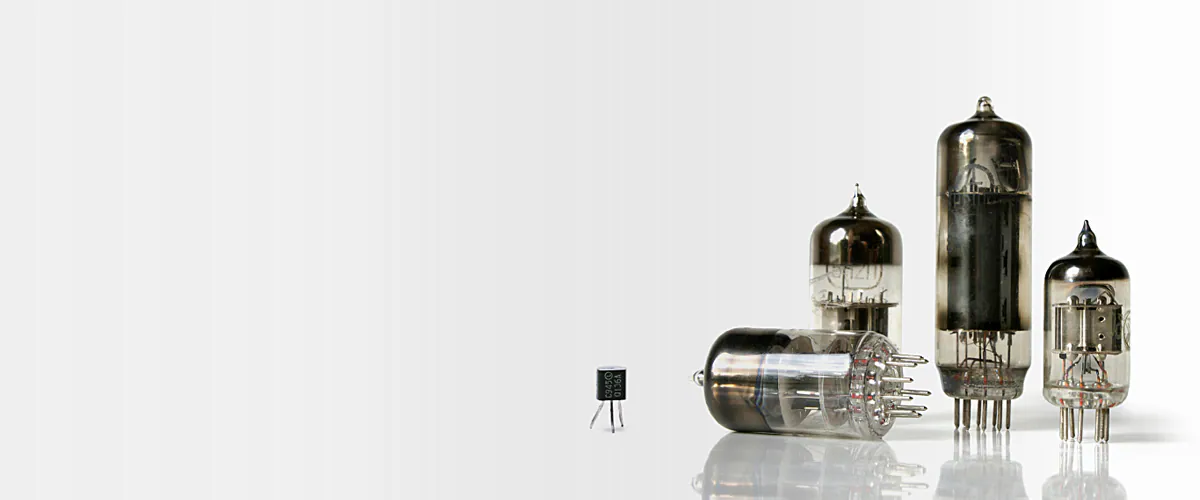
Before semiconductor devices became practical, vacuum tubes dominated the electronics industry. Vacuum tubes were capable of amplifying electrical signals and acting as electronic switches.
Vacuum tubes made several technological advancements possible, including:
- Radio broadcasting
- Television systems
- Radar systems
- Early computers
- Military communication technologies
Large computing systems during this period depended entirely on thousands of vacuum tubes operating together.
However, vacuum tubes had serious disadvantages:
- High power consumption
- Excessive heat generation
- Frequent equipment failure
- Large physical size
- Expensive maintenance requirements
As electronic systems became more advanced, engineers realized vacuum tubes could not support the growing demand for smaller, faster, and more reliable technologies.
This challenge encouraged researchers to explore alternative solutions using semiconductor materials.
The Discovery of Semiconductor Materials
Scientists discovered that materials such as silicon and germanium could behave differently from traditional conductors. These semiconductor materials could regulate electrical current more precisely under controlled conditions.
Researchers found that semiconductor conductivity could be modified through processes such as doping, where impurities are intentionally added to alter electrical properties.
This breakthrough created the possibility of building smaller and more efficient electronic switching devices.
Semiconductor research accelerated rapidly because industries needed technologies that could:
- Reduce power consumption
- Improve reliability
- Minimize equipment size
- Increase processing speed
- Support mass production
These requirements eventually led to one of the most important inventions in electronics history.
The Invention of the Transistor
The invention of the transistor completely changed the electronics industry. Engineers developed a small semiconductor device capable of controlling electrical signals without relying on vacuum tubes.
The transistor introduced several major advantages:
- Smaller size
- Higher efficiency
- Improved durability
- Lower heat generation
- Faster electrical switching
This innovation transformed both industrial and consumer electronics.
Transistors quickly replaced vacuum tubes in many applications because they allowed electronic devices to become more compact and reliable. Radios became portable, industrial systems became more stable, and computing systems improved significantly.
The transistor is widely considered one of the most important technological inventions of the twentieth century because it established the foundation for all modern semiconductor systems.
The Rise of Integrated Circuits
As electronic devices became more advanced, engineers faced another major challenge. Connecting thousands of individual transistors manually created reliability issues and manufacturing complexity.
The solution was the integrated circuit.
Integrated circuits allowed multiple semiconductor components to be placed directly onto a single chip. Instead of assembling separate parts individually, entire electronic systems could now be manufactured on silicon wafers.
This advancement produced enormous benefits:
- Reduced production costs
- Improved reliability
- Faster electronic processing
- Smaller device sizes
- Higher manufacturing scalability
Integrated circuits rapidly expanded into industries such as:
- Telecommunications
- Aerospace
- Consumer electronics
- Industrial automation
- Medical equipment
This period marked the beginning of large-scale semiconductor manufacturing and global electronics expansion.
The Semiconductor Revolution in Computing
The development of microprocessors pushed semiconductor technology to an entirely new level. A microprocessor combined the functions of a computer processor onto a single semiconductor chip.
This innovation triggered the digital computing revolution.
Semiconductor advancements made it possible to create:
- Personal computers
- Digital communication systems
- Data storage devices
- Embedded industrial systems
- Network infrastructure
Computing power became more affordable and accessible for businesses and consumers.
The semiconductor industry also introduced specialized chips designed for different applications, including:
- Memory modules
- Graphics processors
- Signal processors
- Power management ICs
- Communication chips
These developments dramatically accelerated technological growth worldwide.
Industrial Impact of Semiconductor Technology
The industrial impact of semiconductors has been enormous. Semiconductor technology transformed manufacturing, logistics, automation, transportation, and communication systems across nearly every sector.
Modern industries now depend on semiconductor devices for:
- Industrial robotics
- Automated production systems
- Smart manufacturing equipment
- Automotive electronics
- Medical diagnostic devices
- Wireless communication infrastructure
Factories increasingly rely on semiconductor-powered automation systems capable of improving efficiency, reducing operational costs, and increasing production accuracy.
Semiconductor innovation also enabled the development of intelligent industrial control systems capable of monitoring equipment, analyzing data, and improving operational performance in real time.
Without semiconductors, modern industrial automation would not exist.
The Growth of Semiconductor Manufacturing
As global demand for electronics increased, semiconductor manufacturing became one of the most important industries in the world.
Manufacturers continuously improved production technologies to create:
- Smaller semiconductor nodes
- Faster processors
- Energy-efficient chips
- High-density memory systems
- Advanced sensor technologies
Semiconductor fabrication facilities became highly specialized environments requiring advanced engineering, precision manufacturing, and strict quality control.
The industry also experienced increasing demand from sectors such as:
- Automotive electronics
- Consumer technology
- Artificial intelligence
- Telecommunications
- Cloud computing
Today, semiconductor production remains critical for global economic growth and technological development.
Modern Semiconductor Technology and AI Systems
Modern semiconductor systems are far more advanced than early electronic technologies. Current semiconductor chips contain billions of microscopic transistors capable of processing enormous amounts of data at high speeds.
Artificial intelligence systems now rely heavily on advanced semiconductor hardware, including:
- AI accelerators
- Graphics processing units
- High-speed memory modules
- Specialized machine learning processors
These systems support technologies such as:
- Autonomous vehicles
- Smart manufacturing
- Robotics
- Predictive analytics
- Language processing systems
Semiconductor technology continues evolving rapidly to meet increasing demand for faster and more efficient computing systems.
Common Challenges in Semiconductor Procurement
As semiconductor demand grows globally, procurement teams face several challenges when sourcing electronic components.
Common issues include:
- Supply chain disruptions
- Component shortages
- Long lead times
- Compatibility concerns
- Counterfeit semiconductor risks
- Rapid technology changes
Many organizations now use AI-assisted sourcing systems to identify alternative components and improve procurement efficiency.
Reliable sourcing strategies have become essential for maintaining industrial production and reducing operational risks.
Helpful Tips for Understanding Semiconductor History
Learn Basic Semiconductor Concepts
Understanding conductivity and electrical control helps explain semiconductor functionality.
Study the Transition from Vacuum Tubes
Comparing older technologies with semiconductors shows why transistors became revolutionary.
Explore Integrated Circuit Development
Integrated circuits explain how electronics became smaller and more powerful.
Follow Industrial Technology Trends
Monitoring semiconductor innovation helps businesses understand future market changes.
Read Component Datasheets
Datasheets provide important technical details about semiconductor performance and compatibility.
FAQs
1. What is a semiconductor?
A semiconductor is a material that can partially conduct electricity and is used to control electronic signals.
2. Why were transistors important?
Transistors replaced vacuum tubes because they are smaller, faster, more reliable, and energy efficient.
3. What is an integrated circuit?
An integrated circuit is a semiconductor chip containing multiple electronic components on a single device.
4. How did semiconductors impact industries?
Semiconductors enabled automation, computing, telecommunications, and intelligent industrial systems.
5. Why are semiconductors important for AI?
AI systems require advanced semiconductor processors capable of handling large-scale data processing and machine learning operations.
Final Words
The history of semiconductors represents one of the most significant technological transformations in modern history. What began as scientific research into electrical conductivity eventually evolved into the foundation of global digital infrastructure and industrial automation.
Semiconductors revolutionized computing, communication, manufacturing, transportation, and intelligent systems by making electronics smaller, faster, more reliable, and energy efficient. Every major stage of semiconductor development contributed to the technologies industries depend on today.
As artificial intelligence, automation, and advanced computing continue expanding, semiconductor technology will remain central to industrial growth and future innovation. The continued evolution of semiconductor systems will likely shape the next generation of intelligent technologies across every major sector worldwide.

 English
 Arabic
 French
 Spanish
 Portuguese
 Deutsch
 Turkish
 Dutch
Dutch
 Italiano
 Russian
 Portuguese (Brazil)
 Greek
Greek