


A Plumber’s Notes: Calibration and Maintenance of Modern Shower Valves
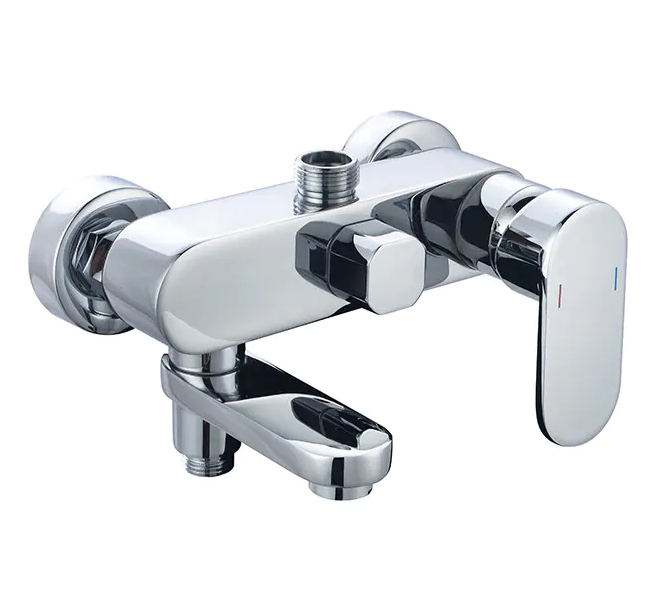
We have all walked into a job where the customer complains about sudden bursts of freezing or scalding water when someone flushes a toilet. In residential service work, the solution often lies in upgrading the bathroom hardware. Specifically, installing a Wall Mounted Thermostatic Shower system resolves these pressure-balancing issues at the source. Unlike conventional mixing valves that require manual guesswork, these units utilize a thermal actuator to react to pressure changes in milliseconds.
Technical Specifications & Installation
When you open the box of a standard exposed Wall Mounted Thermostatic Shower kit, you typically find a brass body with a chrome finish, a riser rail, a handset, and the valve core. Before mounting, check the dynamic water pressure requirements. Many units, like the SP9301CP style models, operate effectively between 1.0 and 5.0 BAR. However, if the incoming pressure exceeds 5.0 BAR, you must fit a pressure reducing valve (PRV) to prevent hammering or damage to the cartridge.
The critical step during installation is the calibration of the temperature stop ring. Factory settings usually cap the output at 41°C to prevent scalding, but site conditions vary. To adjust this on a Wall Mounted Thermostatic Shower, you must remove the control knob to expose the splined spindle and stop rings. By adjusting ring ‘A’ (hot) and ring ‘B’ (cold), you can set the outlet temperature. Measure this with a digital thermometer at the mixed water outlet. Never rely on touch alone; the target temperature for a safe domestic bath is generally 38°C to 46°C.
Common Pitfalls to Avoid
One frequent issue we see is debris in the cartridge. Construction dust in the pipes is the enemy of these precision valves. Always flush the supply pipes thoroughly before connecting the flexible hoses to the mixing valve. Additionally, ensure the unit is mounted on a waterproof vertical surface. If you are installing in a hard water area, recommend a water conditioner to the client. Calcium deposits will eventually stiffen the diverter knob and reduce flow rates. The serviceable nature of the Wall Mounted Thermostatic Shower is an advantage; cartridges are designed to be replaced without tearing out tiles, usually accessible via the front cover.
Final Checks
Once the wall plate is secured and the water supply is connected, test the failsafe mechanism. Turn off the cold supply while the unit is running. A functioning thermostatic valve should shut off the flow or reduce it to a trickle within two seconds. If it doesn't, the cartridge is faulty or the supply lines are reversed (hot on the right, cold on the left). Get this right, and you provide a reliable, maintenance-friendly solution for the homeowner.

 English
 Arabic
 French
 Spanish
 Deutsch
 Turkish
 Dutch
Dutch
 Italiano
 Russian
 Romaian
 Portuguese (Brazil)
 Greek
Greek