


Engineering Stability in Compact Vehicle Systems
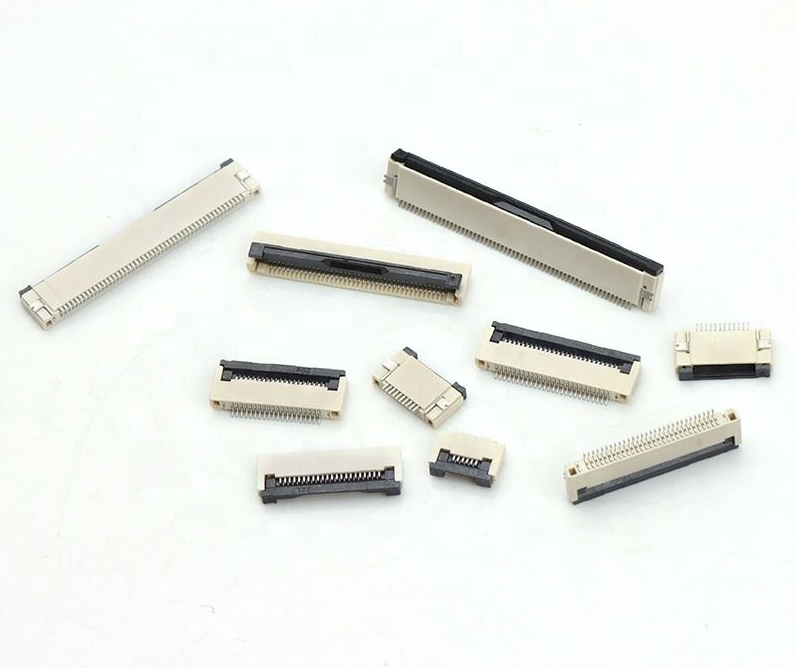
Modern automotive electronics increasingly rely on flexible interconnection systems to meet demands for compact design, vibration resistance, and high-speed signal transmission. One of the key components enabling this transformation is the Automotive FPC Connector, which connects flexible printed circuits (FPC) to rigid PCBs in systems such as infotainment units, instrument clusters, and sensor modules.
From an engineering perspective, an Automotive FPC Connector typically supports 0.3mm to 1.0mm pitch spacing, allowing high-density signal routing in limited PCB space. In many vehicle applications, 0.5mm pitch configurations are widely adopted due to their balance between miniaturization and manufacturing reliability. Contact resistance is generally maintained at ≤30mΩ, ensuring stable low-loss signal transmission in data-sensitive modules.
Electrical performance is a critical factor. These connectors often support rated current from 0.3A to 1A per pin and operate within -40°C to +85°C, while advanced automotive-grade variants may extend up to 125°C for engine-adjacent environments. Signal integrity is especially important in high-speed systems like ADAS cameras and infotainment displays, where connectors must support multi-Gbps transmission with minimal impedance mismatch.
Mechanically, Automotive FPC Connector systems are designed with ZIF (Zero Insertion Force) locking mechanisms. This reduces insertion stress on fragile flexible circuits and improves assembly repeatability, often rated for 20,000+ mating cycles in industrial-grade designs. Dual-contact spring structures are frequently used to improve vibration resistance, ensuring stable connectivity under continuous mechanical stress.
In modern vehicle architectures, FPC connectors are widely used in dashboard displays, rear cameras, steering modules, and battery management systems. Industry discussions highlight their growing importance in reducing wiring harness complexity and improving assembly efficiency while maintaining electrical reliability under harsh automotive conditions.
As automotive electronics evolve toward higher integration and lighter weight structures, the Automotive FPC Connector continues to serve as a foundational element in next-generation vehicle design.

 English
 Arabic
 French
 Spanish
 Deutsch
 Turkish
 Dutch
Dutch
 Italiano
 Russian
 Romaian
 Portuguese (Brazil)
 Greek
Greek